
How fast does a golf cart go? Most standard golf carts travel at approximately 12–15 mph under normal conditions. However, actual golf cart speed can vary widely depending on the vehicle type, motor output, battery voltage, controller settings, tires, passenger load, terrain, and weather.
For golf course operators, resorts, community managers, airports, factories, and tourist attractions, the right golf cart speed helps balance route efficiency, passenger comfort, safety, and daily operating costs. For distributors, OEM/ODM buyers, and high-end private users, it is also an important part of selecting the right vehicle configuration.
In this article, CENGO, one of China’s top golf cart manufacturers, explores average golf cart speeds, key performance factors, and practical, responsible ways to make your cart faster!
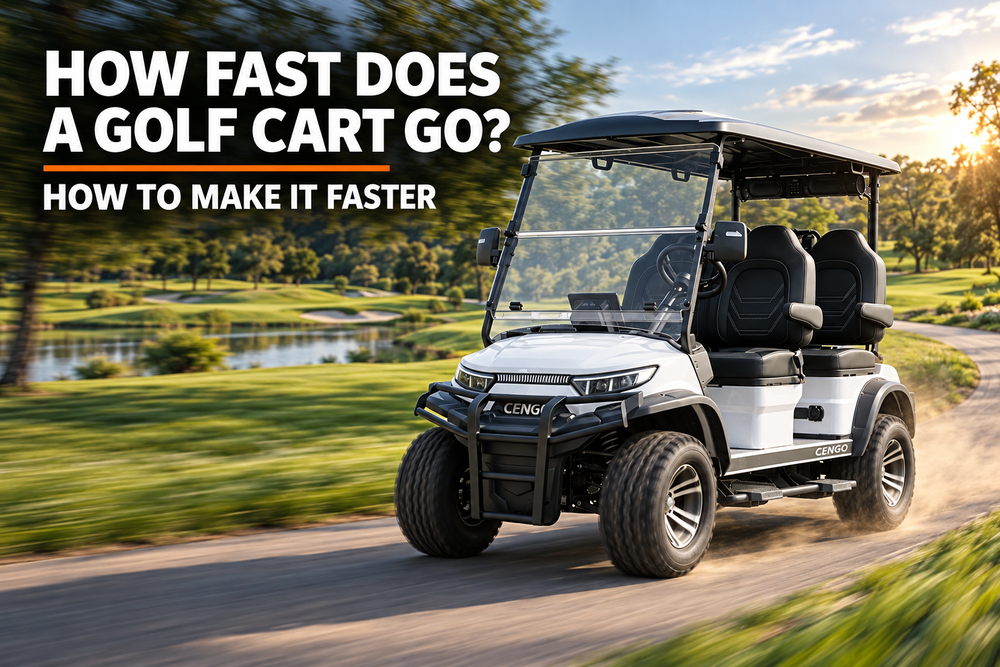
Picture shown: CENGO NL-LCB4G 4-seat electric golf cart with a travel speed of 15.5-25 mph
What Is the Average Speed of a Golf Cart?
The typical average speed of a golf cart is about 12–15 mph for conventional vehicles used on relatively flat golf courses, resorts, private communities, and similar properties. This speed range is generally suitable for transporting people safely while maintaining easy vehicle control in pedestrian-rich environments.
However, not every cart is built for the same purpose. A passenger shuttle at a resort, a utility vehicle at an industrial park, and a lifted cart used for off-road recreation may all have different performance requirements.
| Golf Cart Type | Typical Speed Range | Common Applications |
| Standard electric golf cart | 12–15 mph | Golf courses, resorts, communities, hotels |
| Standard gas golf cart | 12–19 mph | Large properties, hilly sites, utility use |
| Street-legal / LSV golf cart | 20–25 mph | Approved public-road and community travel |
| Lifted golf cart | Varies by setup | Recreation, rough terrain, private properties |
Note:
A street-legal golf cart is not simply a standard cart driven on a public road. In the United States, a low-speed vehicle, or LSV, is generally a four-wheeled motor vehicle designed to travel at more than 20 mph but no more than 25 mph, subject to federal equipment requirements and local road-use rules.
The National Highway Traffic Safety Administration’s LSV guidance is a useful starting point, but operators should always check state and local laws before planning public-road use.
LSVs may require features such as headlights, taillights, turn signals, mirrors, seat belts, a windshield, and a vehicle identification number. Registration, insurance, driver licensing, and road-access rules can also vary by location.
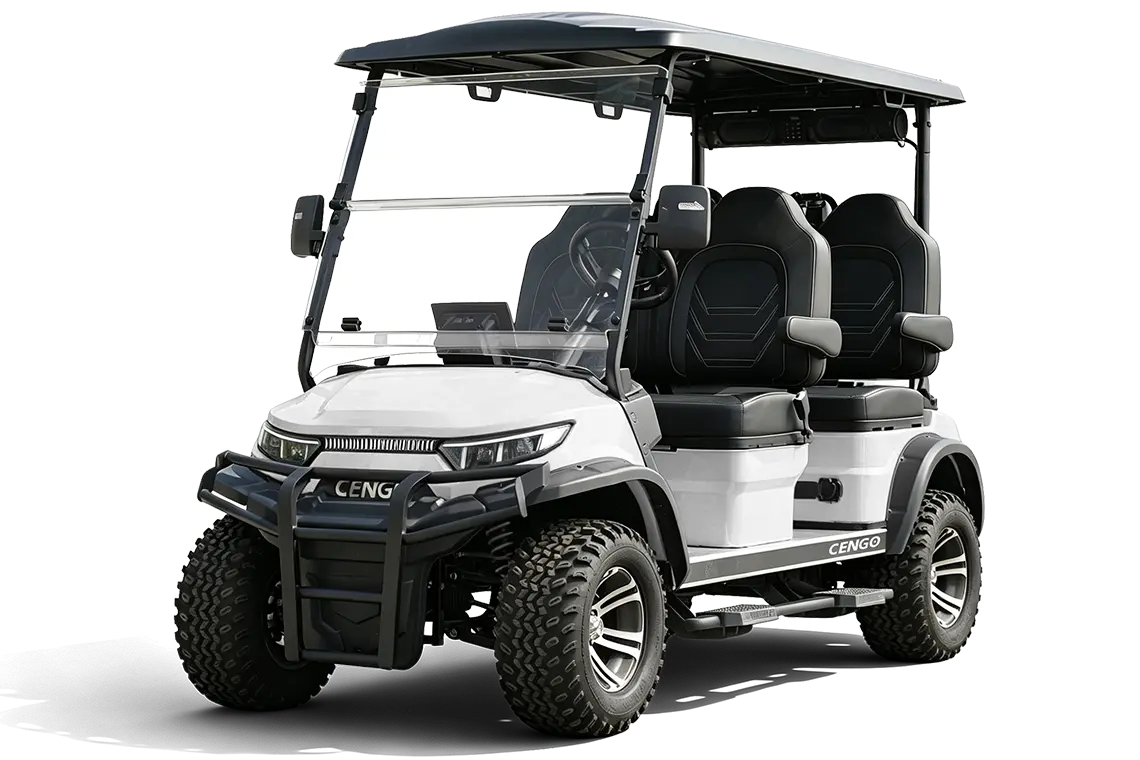
Picture shown: CENGO NL-LCB4G with a travel speed of 15.5-25 mph
What Factors Affect Golf Cart Speed?
Golf cart speed is the result of a complete vehicle system—not one part alone. Buyers and fleet operators should evaluate the following factors together.
1. Motor Type and Power
The motor is a major factor in acceleration, hill-climbing ability, and top-speed potential. Higher-output motors can help a cart move more effectively with passengers, cargo, or inclines. However, motor upgrades must be matched with compatible batteries, controllers, cables, and cooling capacity.
2. Battery Voltage and Condition
For electric carts, voltage affects the available electrical power. A 48V or 72V system can offer different performance potential than a lower-voltage configuration, but a higher-voltage system alone does not guarantee better results.
Battery condition matters just as much. Aging, poorly maintained, undercharged, or unbalanced batteries may reduce acceleration and cause noticeable speed loss, especially on hills or with a full passenger load.
3. Controller Settings
The speed controller regulates how power flows from the battery system to the motor. Many standard carts use controller settings that prioritize safe, smooth operation rather than maximum speed. A performance-oriented controller may increase acceleration and top-speed potential when properly matched to the vehicle.
4. Tire Size and Tread
Tire diameter, pressure, tread pattern, and rolling resistance all affect performance. Larger tires can cover more distance per wheel rotation, but they may reduce torque at the wheels. Aggressive off-road tread can improve traction on loose surfaces while creating more rolling resistance on paved paths.
5. Weight and Payload
Every additional passenger, cargo item, enclosure, accessory, or utility attachment increases the work required from the powertrain. A lightly loaded cart on level pavement will usually travel faster than a fully occupied shuttle cart carrying guests and luggage.
6. Terrain, Weather, and Charge Level
Steep inclines, soft grass, gravel, mud, uneven terrain, strong headwinds, and wet surfaces can reduce actual golf cart speed. Cold temperatures may also affect battery performance. In addition, a cart nearing the end of its battery charge will often feel slower than one with a fully charged, healthy battery pack.
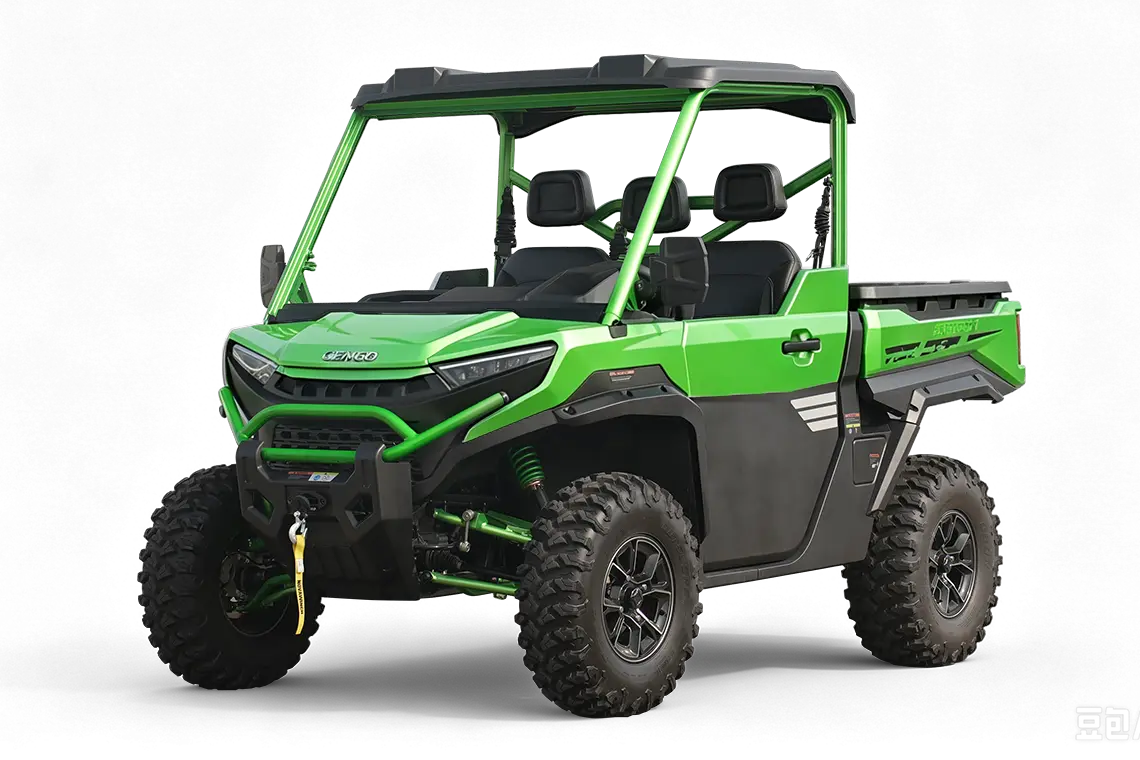
Picture shown: CENGO NL-F12 3-seat UTV with a travel speed of 25-53 mph
5 Practical Ways to Make a Golf Cart Faster
If you are considering how to make a golf cart faster, focus on a complete, compatible upgrade plan rather than a single modification. Any meaningful speed increase should also include a review of braking, steering, tires, suspension, vehicle stability, and applicable regulations.
1. Upgrade the Motor
A higher-performance motor can improve acceleration and help the cart maintain speed under heavier loads or on slopes. This option is especially relevant for commercial properties with hills, long routes, or frequent passenger transportation.
Before upgrading, confirm that the controller, battery system, cables, solenoids, and charger can support the new motor’s electrical requirements.
2. Increase Battery Voltage
Increasing battery voltage can provide greater performance potential, particularly when paired with the right motor and controller. For example, a properly engineered higher-voltage system may offer stronger acceleration and better hill performance.
This is a system-level modification. Batteries, BMS, wiring, charger, controller, and safety protections should all be evaluated together by a qualified technician or manufacturer.
3. Install a High-Speed Controller
A high-speed controller can increase the available motor RPM and improve throttle response. It may be an efficient option when the existing motor and battery system are already suitable for higher performance.
However, removing or bypassing a factory speed limit without checking safety, warranty, and legal requirements is not recommended—especially for carts used around guests, workers, pedestrians, or public roads.
4. Change the Gear Ratio
Changing the gear ratio can shift a cart’s performance toward higher top speed or stronger torque. A speed-focused gear ratio can be useful on flat paved routes, while a torque-focused setup is usually better for steep terrain, cargo, or frequent stop-and-go driving.
This modification involves a tradeoff: more top speed may mean reduced pulling power and climbing performance.
5. Upgrade Tires Carefully
Larger-diameter tires may modestly increase top speed because the cart travels farther with each wheel rotation. Still, bigger tires can affect braking, steering, ride height, suspension clearance, and stability.
For fleet vehicles, choose tires based on the actual operating environment—smooth resort roads, golf paths, industrial pavement, gravel routes, or off-road terrain—not speed alone.
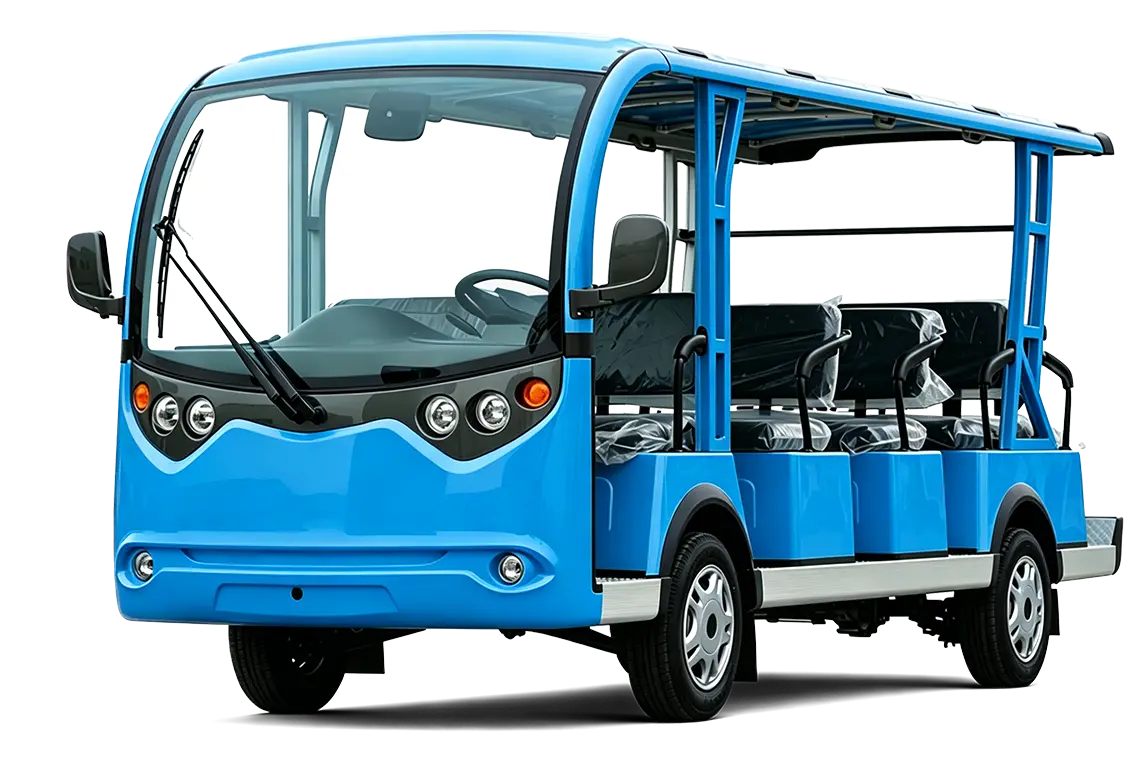
Picture shown: CENGO NL-S14.C 14-seat electric sightseeing vehicle with a top travel speed of 18.6 mph
Partner With CENGO for Reliable Golf Cart Performance
For commercial buyers, the best golf cart speed is not necessarily the highest number. The right solution is a vehicle that delivers dependable performance for its intended route, passenger capacity, terrain, load, and operating hours.
CENGO supplies electric golf carts, sightseeing vehicles, functional utility vehicles, and UTVs for golf courses, resorts, hotels, factories, airports, cruise facilities, villas, and other mobility applications. We support customized electric golf cart solutions, including vehicle color, tire options, logos, and seating configurations, helping buyers match vehicles to specific fleet and branding requirements.
Some of CENGO mobility solutions are shown below:
| Model | Vehicle Type | Power and Performance | Key Features | Suitable Mobility Solutions |
| NL-F12 | 3-seat electric UTV with ergonomic foam seats; optional leather seats | Speed range: 25–53 mph; 144V 15 KW dual motors | 12.3-inch multimedia console; USB and Type-C ports; differential lock; winch; electronic parking brake; LED lighting; coil-spring damping | Suitable for resorts, campuses, communities, airports, railway stations and large commercial sites that require versatile site transportation |
| NL-LCB4G | 4-seat electric golf cart | Speed range: 15.5–25 mph; 48V 5KW AC asynchronous motor | Lead-acid or lithium battery; 48V/30A onboard charger; charging time under 5 hours; four-wheel hydraulic disc brakes; optional EPS | Compact passenger transportation for golf courses, hotels, residential communities, schools and commercial campuses |
| NL-LC4+2 | Electric golf cart with a flexible 4+2-seat layout | Top speed: 15.5 mph; 48V 4 KW AC asynchronous motor | Lead-acid or lithium battery; front independent suspension; four-wheel hydraulic disc brakes; EPB; optional EPS; USB and Type-C ports | Short-distance passenger transportation for golf courses, resorts, communities, schools and commercial facilities |
| NL-S14.C | 14-seat electric sightseeing vehicle | Top speed: 18.6 mph; 72V 7.5 KW AC asynchronous motor | Front MacPherson independent suspension; rear integral axle with leaf springs; electric power steering; hydraulic braking; electric vacuum brake assistance | Higher-capacity transportation on fixed routes in tourist attractions, theme parks, resorts, campuses, airports and industrial parks |
| NL-S8.FB | Vintage-style 8-seat electric sightseeing vehicle | Top speed: 18.6 mph; 48V 5KW AC asynchronous motor | FRP instrument panel; speedometer; battery meter; hydraulic braking; mechanical parking brake | Passenger transportation for historic districts, tourist attractions, theme parks and destination resorts requiring a distinctive vehicle design |
For distributors, project buyers, and OEM/ODM customers, CENGO’s broad product categories and configuration flexibility can support different use cases. If you need reliable mobility solutions or custom vehicle configurations for your project, contact CENGO today to discuss your specifications and get a tailored quote!
FAQs
1. How fast do golf carts go on average?
Under normal conditions, the average speed of golf cart models is between 12 and 15 mph. However, high-performance or upgraded models can easily reach 20 mph or more.
2. What is the top speed of a golf cart legally allowed on the road?
For a golf cart to be classified as a Street-Legal Low-Speed Vehicle (LSV) on public roads, federal safety regulations generally cap the legal top speed at 25 mph.
3. Can you make a golf cart go faster without voiding the warranty?
Modifying electrical components or installing aftermarket controllers on your own will usually void the manufacturer’s warranty. To protect your investment, always consult your dealer or opt for authorized OEM performance upgrades.
4. Do bigger tires make a golf cart faster?
Yes. Larger tires can slightly increase theoretical top speed, but the result depends on motor power, gear ratio, vehicle weight, and terrain. Larger tires may also reduce torque and affect braking, handling, and stability.
5. How much does it cost to increase golf cart speed?
Total costs vary depending on the chosen method. Minor software recalibrations usually represent the most budget-friendly option, whereas upgrading tires, gear ratios, or suspension requires a moderate investment. Comprehensive powertrain overhauls—including high-output motors, lithium batteries, and programmable controllers—are the most expensive. Often, choosing a factory-configured high-performance cart is far more economical.
6. Is it safe to modify a golf cart for higher speed?
Speed modifications must always be paired with safety upgrades. If you push a cart past 20 mph, it is highly recommended to upgrade to front disc brakes, install safety seatbelts, and ensure your suspension framework can handle the increased momentum.
Post time: Nov-02-2026


