
Payload capacity depends on more than motor power or battery size. The frame carries passengers, cargo, batteries, body panels, and the forces created during driving. In electric golf carts, frame material affects strength, stiffness, vehicle weight, and how the chassis responds when the load changes.
For dealers, golf courses, farms, resorts, and shuttle operators, this matters because different applications place different demands on the vehicle. A cart used for passenger transport does not face the same loading pattern as a utility model carrying tools, supplies, or equipment across uneven ground.
Why Frame Material Matters to Payload
When we evaluate a frame, we look at strength, stiffness, weight, fatigue behavior, and corrosion resistance. These properties influence how much load the chassis can support and how it performs over repeated operating cycles.
Material thickness and frame geometry are just as important as the material itself. Two frames made from the same metal can behave differently if the tube size, wall thickness, cross-member layout, or welding structure is different.
This is why payload should not be judged from the material name alone. Buyers need to consider how the complete frame is designed, where reinforcement is added, and how the structure connects with the suspension and body.
Steel and Aluminum Have Different Trade-Offs
Steel is commonly used in vehicle frames because it offers useful strength and stiffness. It can support practical chassis designs without requiring overly complex sections. The main trade-off is weight, because a heavier frame increases the vehicle’s own mass before passengers or cargo are added.
Aluminum has a lower density, so it can reduce chassis weight. This may leave more of the vehicle’s total weight allowance available for passengers or cargo. However, aluminum sections may need different dimensions, joining methods, or reinforcement to achieve the required stiffness and fatigue performance.
From our perspective, the right choice depends on the vehicle’s intended work. Golf course fleets, hotel shuttles, farm carts, and outdoor utility vehicles may all need different balances between weight, strength, durability, and cost.
Payload Is a Whole-Vehicle Question
The frame is important, but payload capacity also depends on axles, suspension, tires, wheels, brakes, steering, and drivetrain components. If one part has a lower rated limit, that component can restrict the usable payload of the complete vehicle. For example, a vehicle may have sufficient frame strength for a proposed cargo load, yet still exceed an axle or tire load rating when that cargo is concentrated near the rear. Buyers should therefore check the manufacturer’s payload definition, gross vehicle weight rating where applicable, front and rear axle limits, and permitted passenger or cargo arrangement. The load must be distributed within the applicable limits rather than assessed by total weight alone.
Battery placement also changes the load distribution. Batteries add weight and can shift the balance between the front and rear axles. In electric golf carts, we consider battery location together with passenger seating and cargo position so that the chassis and running systems work as a coordinated structure.
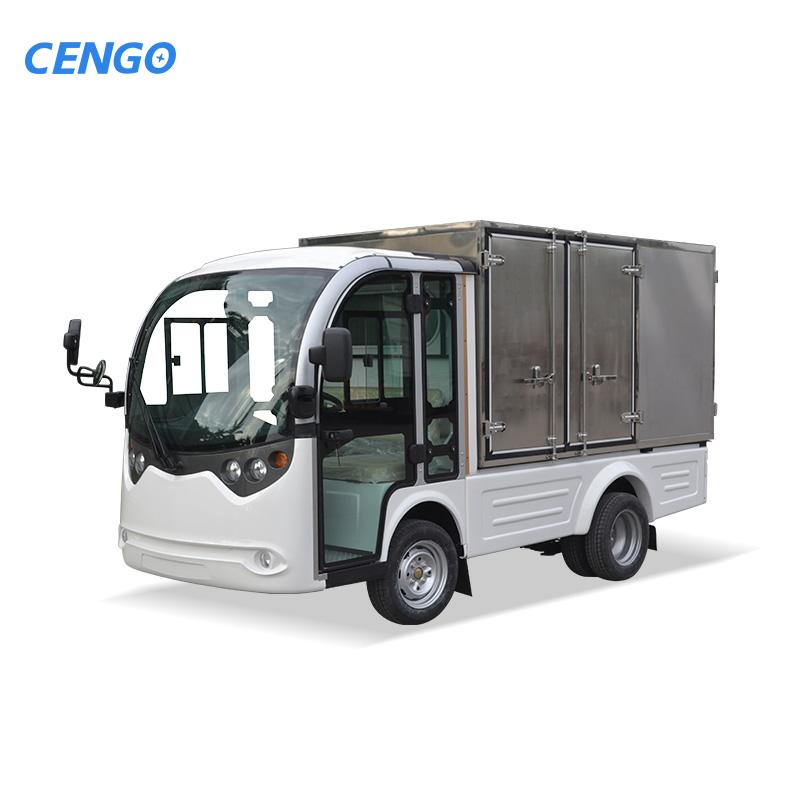
Seat layout creates another difference. A two-seat cart, a multi-passenger shuttle, and a cargo utility model place weight in different areas. This changes the stress on the frame, suspension mounting points, and steering system.
Steering Performance Changes With Load
Payload affects more than chassis stress. It can also change steering effort and vehicle response, especially during low-speed turns, repeated stops, or shuttle operation in compact spaces.
On the NL-S2.D.HX, we use a bidirectional rack and pinion steering system with automatic clearance compensation and electric power steering. This steering system is designed to provide controlled steering support while helping manage clearance within the steering mechanism during operation.
For distributors comparing vehicles for resorts, communities, airports, or tourism sites, steering should be reviewed together with payload and frame structure. A heavier operating load can change how the driver experiences turning, maneuvering, and low-speed control.
What B2B Buyers Should Compare
For procurement, a payload figure becomes more useful when buyers understand what supports that number. We suggest checking frame material, tube or section design, corrosion protection, axle ratings, suspension layout, tire specifications, and the way the manufacturer defines rated load.
Operating conditions should also be clear before ordering. Golf course fleets may focus on passenger comfort and frequent short trips. Farms may require cargo carrying and uneven-ground use. Hotels and airports may need repeated shuttle service with predictable passenger loads.
At CENGO, we also consider appearance, configuration, delivery schedule, and customization needs because these factors matter to dealers and fleet buyers. Our daily production capacity is 60–80 units, and the minimum order quantity starts from 20FT. We also accept customization for different project requirements.
Matching Frame Design to Real Use
The practical way to judge payload is to connect the rating with the actual duty cycle. Frequent passenger transport, cargo movement, slopes, rough surfaces, and repeated starts can create very different structural demands.
For dealers and distributors, this makes comparison more useful. Instead of asking only how much a cengocar model can carry, buyers can review frame construction, seating layout, steering support, suspension, and expected working conditions as one system. They should also ask how the rated payload was defined and whether it reflects the intended passenger or cargo arrangement.
Frame material affects payload capacity through strength, stiffness, and vehicle weight, but it does not work alone. We consider the frame together with steering, suspension, seating, batteries, and the expected operating environment.
This approach helps B2B buyers select vehicles based on real use rather than one specification. When a cengocar configuration is evaluated for a project, the frame should be considered together with load distribution, route conditions, and daily operating frequency. CENGO manufactures golf carts and other electric vehicles for dealers, golf courses, farms, communities, hotels, airports, tourism sites, outdoor applications, and other commercial mobility projects.
Post time: Oct-18-2026


