
How much does a golf cart weigh? On average, a standard golf cart weighs between 800 and 1,200 pounds (360 to 544 kg). However, this baseline can fluctuate significantly based on configuration. Compact two-seaters can weigh as little as 600 pounds, while heavy-duty multi-passenger shuttle buses or utility models can easily exceed 1,500 pounds.
A major game-changer in electric golf cart weight today is the battery system. Due to higher energy density, lithium models are substantially lighter than lead-acid counterparts. A traditional 48V lead-acid battery pack often weighs 300 to 400 pounds, whereas a comparable LiFePO4 lithium pack can weigh just 70 to 130 pounds. This significant reduction improves acceleration, extends range, and reduces wear and tear on the vehicle’s chassis.
Obviously, the power source isn’t the only variable. Golf cart weight can vary greatly depending on factors such as vehicle size, seating capacity, lifted designs (off-road kits), and heavy-duty commercial construction.
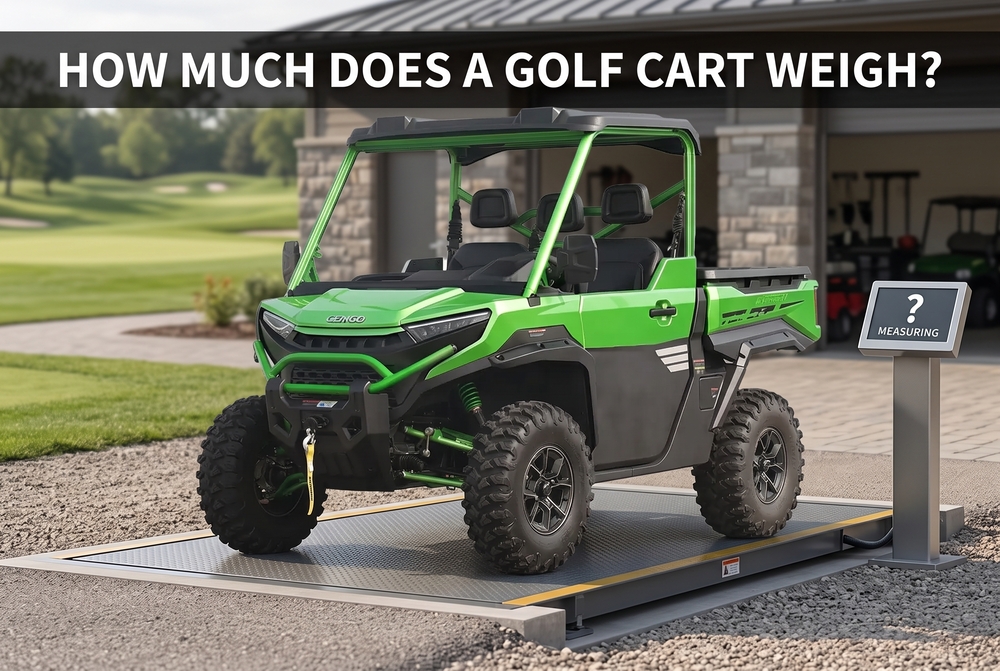
Picture shown: CENGO NL-F12 3-seat UTV
How Heavy Is a Golf Cart?
The table below provides practical golf cart weight ranges for planning purposes. These are general estimates, not universal specifications. The final golf cart weight will vary by manufacturer, battery package, options, and the definition used for vehicle weight.
| Golf Cart Type | Typical Seating Capacity | Approximate Weight Range | Common Considerations |
| Standard electric golf cart | 2 passengers | 650–1,000 lbs | Lead-acid battery packs can add substantial weight |
| Standard four-seat golf cart | 4 passengers | 750–1,100 lbs | Rear seating, longer frame, roof, and battery type affect weight |
| Lithium four-seat golf cart | 4 passengers | 750–1,000 lbs | Often lighter than comparable lead-acid electric models |
| Lifted golf cart | 2–4 passengers | 850–1,200+ lbs | Larger tires, wheels, suspension components, and reinforced parts add weight |
| Six-seat people mover | 6 passengers | 1,000–1,300+ lbs | Longer chassis and higher passenger capacity increase vehicle mass |
| Utility or heavy-duty cart | 2–4 passengers | 900–1,400+ lbs | Cargo beds, reinforced frames, equipment, and work accessories can increase weight |
Real-world Golf Cart Weight Examples
1. Two-Seat Golf Cart Weight Examples
| Brand and Model | Powertrain / Configuration | Published Weight | Weight Definition / Notes |
| CENGO NL-LC2L | Electric; lead-acid or lithium battery options | 560 kg / 1,235 lb | Vehicle weight for the specified configuration; confirm the final battery package and seating layout before ordering |
| Club Car Onward® 2 Passenger | Gas | 675 lb / 306.2 kg | Total vehicle weight |
| Club Car Onward® 2 Passenger | Electric | 975 lb / 442 kg | Total vehicle weight |
| Atlas PRO Golf Cart | Electric configuration | 1,036 lb / 470 kg | Published vehicle weight; actual weight may vary with battery and accessories |
| Yamaha 2-Seater | Electric, with sun top and flooded battery | 443 kg / 977 lb | Vehicle weight with the listed standard equipment |
| Yamaha 2-Seater | Gas, with sun top, battery, oil, and gasoline | 344 kg / 758 lb | Vehicle weight including the listed operating components |
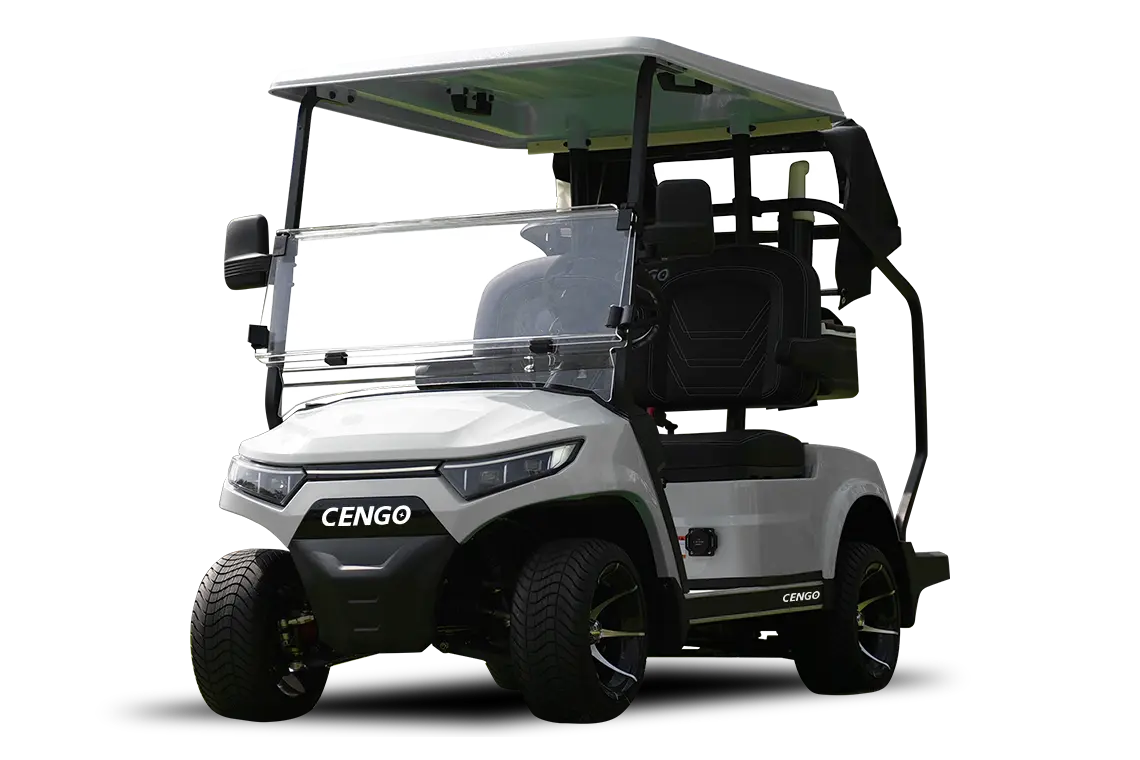
Picture shown: CENGO NL-LC2L 2-seat electric golf cart
2. Four-Seat Golf Cart Weight Examples
| Brand and Model | Powertrain / Configuration | Published Weight | Weight Definition / Notes |
| CENGO NL-WD2+2.G | Lifted electric golf cart; lead-acid or lithium battery options | 650 kg / 1,433 lb | Vehicle weight for the stated configuration |
| Club Car Onward® 4 Passenger | Gas, non-lifted | 795 lb / 361 kg | Curb weight |
| Club Car Onward® 4 Passenger | Gas, lifted | 875 lb / 396.9 kg | Curb weight |
| Club Car Onward® 4 Passenger | Electric, non-lifted | 1,070 lb / 485.3 kg | Curb weight |
| Club Car Onward® 4 Passenger | Electric, lifted | 1,125 lb / 510.3 kg | Curb weight |
| E-Z-GO Liberty 4F | Electric | 1,166 lb / 529 kg | Curb weight |
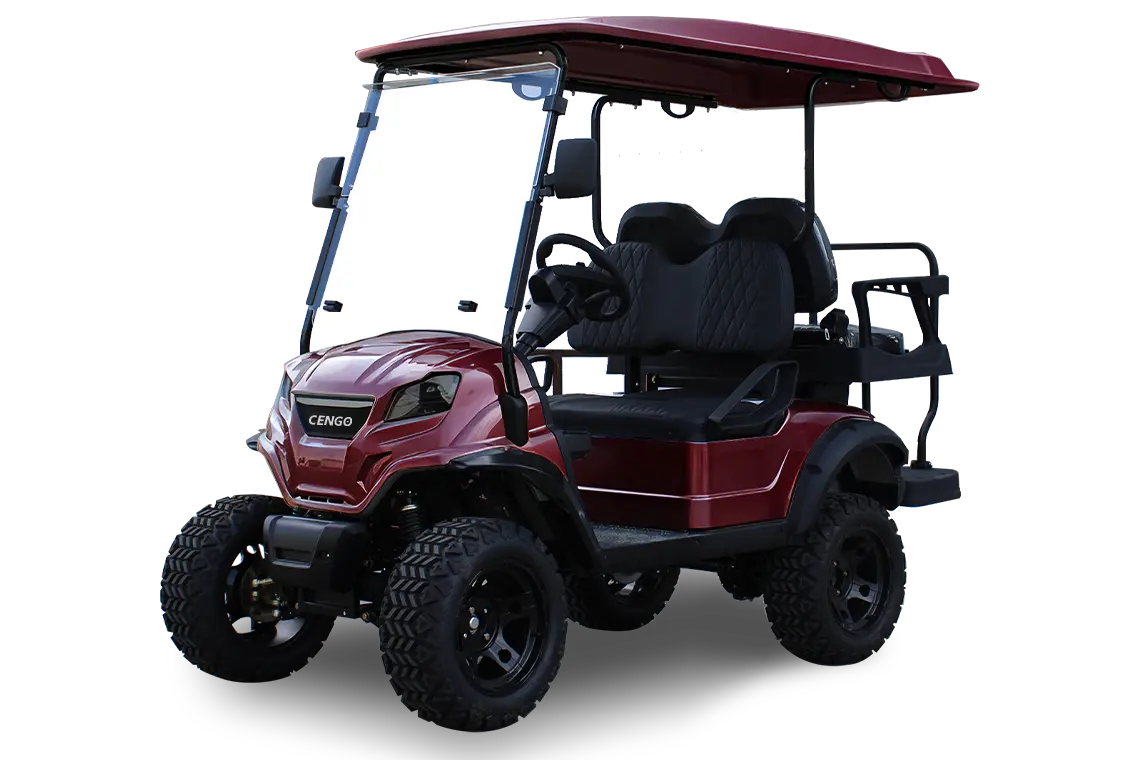
Picture shown: CENGO NL-WD2+2.G 4-seat electric golf cart
3. Six-Seat Golf Cart Weight Examples
| Brand and Model | Powertrain / Configuration | Published Weight | Weight Definition / Notes |
| CENGO NL-LC4+2 | Electric; lead-acid or lithium battery options | 665 kg / 1,466 lb | Vehicle weight for the stated configuration |
| E-Z-GO 2027 Express 6 Touring S | ELiTE lithium electric | 1,100 lb / 499 kg | Curb weight |
| E-Z-GO 2027 Express 6 Touring S | 13.5-hp gas | 1,130 lb / 528 kg | Curb weight |
| Club Car Onward® 6 Passenger | Gas, non-lifted | 980 lb / 444.5 kg | Curb weight |
| Club Car Onward® 6 Passenger | Gas, lifted | 1,101 lb / 499.4 kg | Curb weight |
| Club Car Onward® 6 Passenger | HP electric, non-lifted | 1,293 lb / 586.5 kg | Curb weight |
| Club Car Onward® 6 Passenger | HP electric, lifted | 1,429 lb / 648.2 kg | Curb weight |
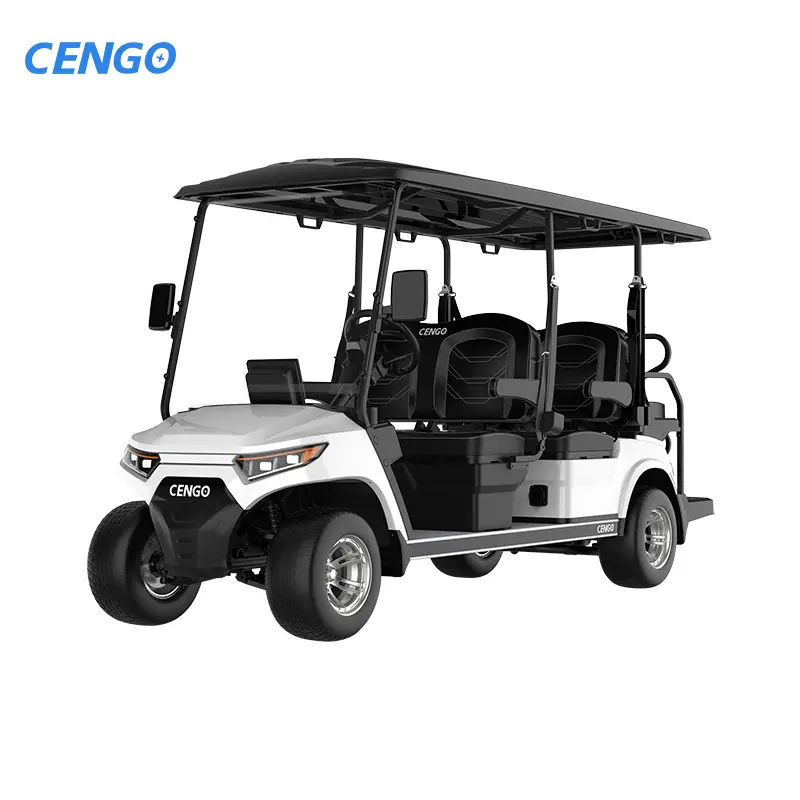
Picture shown: CENGO NL-LC4+2 6-seat electric golf cart
4. Utility and All-Terrain Vehicle Weight Examples
| Brand and Model | Seating Capacity | Powertrain / Configuration | Published Weight | Weight Definition / Notes |
| CENGO NL-F12 | 3 | All-terrain electric utility vehicle | 1,050 kg / 2,315 lb | Vehicle weight; intended for more demanding utility and mixed-terrain applications |
| Club Car Carryall 300 | 2 | Gas | 817 lb / 371 kg | Curb weight |
| Club Car Carryall 300 | 2 | Electric | 1,105 lb / 501 kg | Curb weight |
| Cushman Hauler 1200 | 2 | Utility vehicle | 980 lb / 445 kg | Curb weight |
Note for Buyers: Always check the manufacturer’s specifications for the exact golf cart weight definition, as “dry weight” (without batteries) and “curb weight” (ready to drive) mean different things.
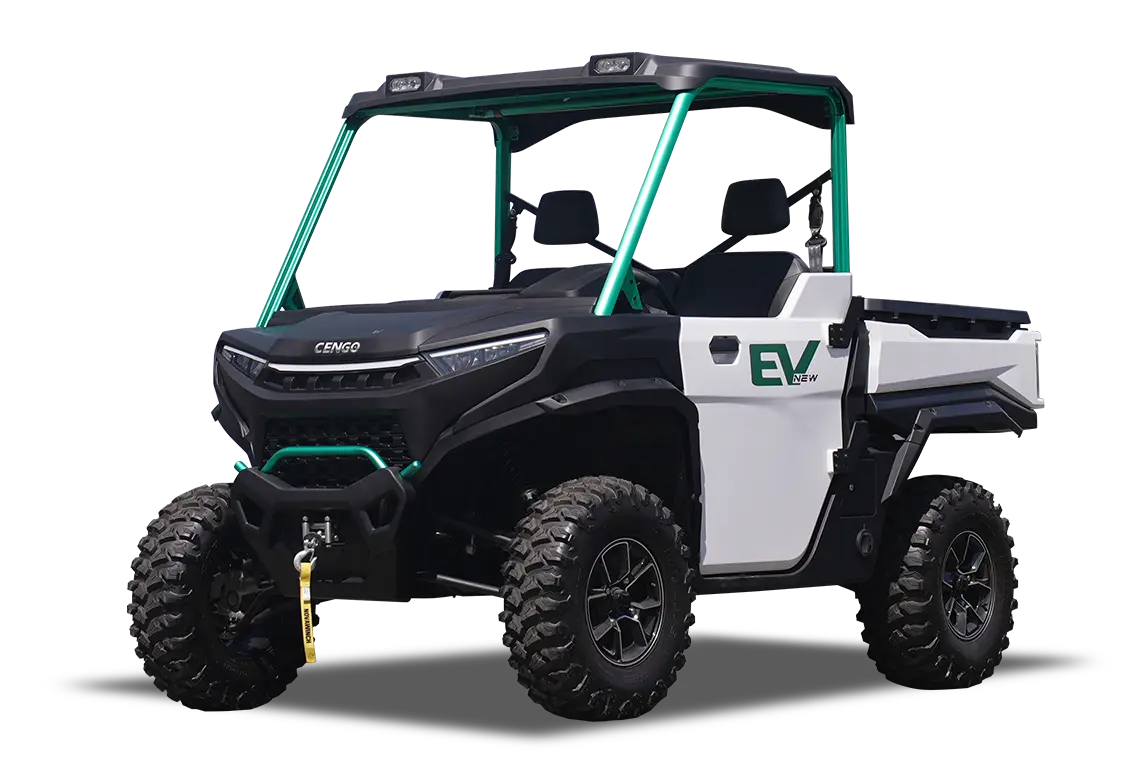
Picture shown: CENGO NL-F12 3-seat UTV
Factors That Affect Golf Cart Weight
If you are wondering why two similar-looking carts have vastly different weights, it comes down to their custom configurations. Here are the five primary factors that dictate weight:
1. Seating Capacity
More seats usually mean more weight. A four-seat golf cart generally requires a longer chassis, additional seat structure, a larger roof area, and a higher load capacity than a two-seat model. Six-seat shuttle-style carts require even more frame length and structural support.
2. Gas or Electric Power
Historically, gas-powered golf carts were lighter than electric ones because an engine and fuel tank weigh substantially less than a traditional bank of lead-acid batteries. However, modern premium lithium electric models often weigh the same—or even less—than their gas counterparts.
3. Materials and Construction
Frame material is a major contributor. Aircraft-grade aluminum frames resist rust and keep the golf cart weight exceptionally low. High-strength steel frames with powder coatings provide unmatched durability for industrial parks and heavy-duty utility tasks, but they add more weight to the final product.
4. Tires and Wheels
Standard 8-inch turf tires are relatively light. But if you plan to navigate uneven terrain at a resort or farm, you might opt for a lifted cart with 14-inch aluminum wheels and bulky all-terrain tires. These off-road setups and heavy-duty suspension lift kits can easily add 50 to 100 pounds.
5. Accessories
Personalizing a golf cart adds up quickly on the scale. High-end accessories like extended roofs, heavy-duty front brush guards, rear flip-flop cargo beds, full glass windshields, and upgraded audio systems all increase the total mass.
FAQs About Golf Cart Weight
1. How much does a golf cart weigh without batteries?
Without the battery pack, an electric golf cart’s “dry weight” is significantly lower. Typically, a standard golf cart weighs between 650 and 900 pounds (295 to 408 kg) without batteries. This is primarily the combined weight of the chassis, body panels, motor, and seats.
2. Does a lithium battery make a golf cart lighter?
Usually, yes. Switching from traditional lead-acid to a lithium-ion battery can reduce the golf cart weight by 200 to 300 pounds. This significant weight reduction translates to better climbing ability, longer driving range, less tire wear, and an overall smoother ride.
3. Is an electric golf cart heavier than a gas golf cart?
A lead-acid electric cart is often heavier than a comparable gas model because of the battery pack, whereas lithium electric carts can be much closer in weight to gas versions. For example, Club Car lists its non-lifted Onward® four-passenger gas model at 795 lb and its non-lifted HP lithium model at 797 lb, while the flooded-lead-acid electric version is listed at 1,070 lb.
4. How heavy is a 4-seater golf cart?
The average weight of a 4-seater golf cart typically ranges from 750 to 1,100 pounds (340 to 499 kg). If it is a lifted, off-road version with lead-acid batteries and a rear flip seat, it will lean toward the heavier end of that scale. A standard, lithium-powered 4-seater will be much closer to the 900-pound mark.
Choose the Right Golf Cart With CENGO
Golf cart weight should be evaluated alongside passenger capacity, operating terrain, battery technology, range, charging requirements, cargo needs, and local operating rules. A lightweight two-seat cart may be ideal for golf course operations or residential mobility, while a reinforced multi-passenger vehicle may be better suited to resort transfers, tourist routes, factories, airports, or large property developments.
At CENGO, we provide electric golf carts, sightseeing vehicles, and utility-oriented mobility solutions for golf courses, hotels, resorts, tourist attractions, airports, industrial sites, residential communities, and commercial projects. Our team can help buyers evaluate seating layouts, battery options, vehicle configurations, and project-specific accessories, offering reliable golf cart OEM & ODM services.
Additionally, all CENGO vehicles are backed by strict quality control, international certifications (CE, DOT, VIN), and an industry-leading 5-year warranty on batteries.
Ready to upgrade your fleet or explore a custom golf cart solution? Visit the CENGO official website today to discover our rich product categories, or contact our sales team to get a personalized quote!
Post time: Nov-02-2026


