
Scaling golf cart production requires more than adding assembly workers or increasing warehouse space. For dealers, distributors, golf courses, resorts, farms, and shuttle operators, production capability affects delivery planning, fleet expansion, and replacement schedules. Buyers should therefore look at how output, model planning, testing, customization, and supply coordination work together.
When comparing golf cart manufacturers, daily production is only one part of the picture. A useful assessment also includes order flexibility, product update cycles, certification, warranty terms, and whether the factory can maintain stable specifications across repeat orders.
Capacity Should Follow Real Demand
Production volume needs to match real purchasing patterns. Some distributors order by container throughout the year, while a hotel, tourism site, or golf course may require a larger batch before a new season or project opening.
Daily capacity can show how quickly a factory can process orders, but buyers should also ask how materials, batteries, motors, body parts, testing, and packing are scheduled. Delays in one step can affect the full shipment even when assembly capacity looks sufficient.
Order forecasts also help factories prepare capacity more accurately. Dealers can share expected shipment windows, preferred configurations, and approximate quantities before placing repeat orders.
For this reason, buyers should compare output with minimum order quantity and delivery arrangements. A factory that works with commercial orders needs a production rhythm that can support repeat shipments without creating unnecessary changes in specification.
We currently operate with a daily production capacity of approximately 60–80 units. For container-based orders, we confirm minimum order requirements according to the selected models, quantities, and shipping arrangements. This helps our B2B customers plan inventory and coordinate deliveries with dealer demand or project schedules. These figures give B2B customers a clearer basis for planning container orders, local inventory, and project delivery windows.
Model Renewal Also Affects Scale
Production capability is closely connected with model development. New body designs require molds, parts, assembly procedures, and inventory planning. If updates are introduced without a clear cycle, they can create pressure on sourcing and production scheduling.
Buyers often care about exterior appearance because it affects local market acceptance. This is especially relevant for golf cart dealers, outdoor brands, hotels, and tourism operators that want vehicles to fit a specific visual style.
At CENGO, we introduce two new vehicle bodies each year and refresh private-mold exterior designs on a two-year cycle. This approach helps us balance new styling with repeatable production planning instead of changing models without a clear schedule.
When evaluating a golf cart manufacturer, buyers can ask how long a model will remain available, whether repeat orders can keep the same configuration, and how new designs are phased into production.
Vehicle Configuration Must Fit the Route
Higher output does not replace the need for suitable vehicle configuration. Golf courses, farms, resorts, communities, airports, and outdoor routes can have very different road conditions, slopes, passenger loads, and daily operating hours.
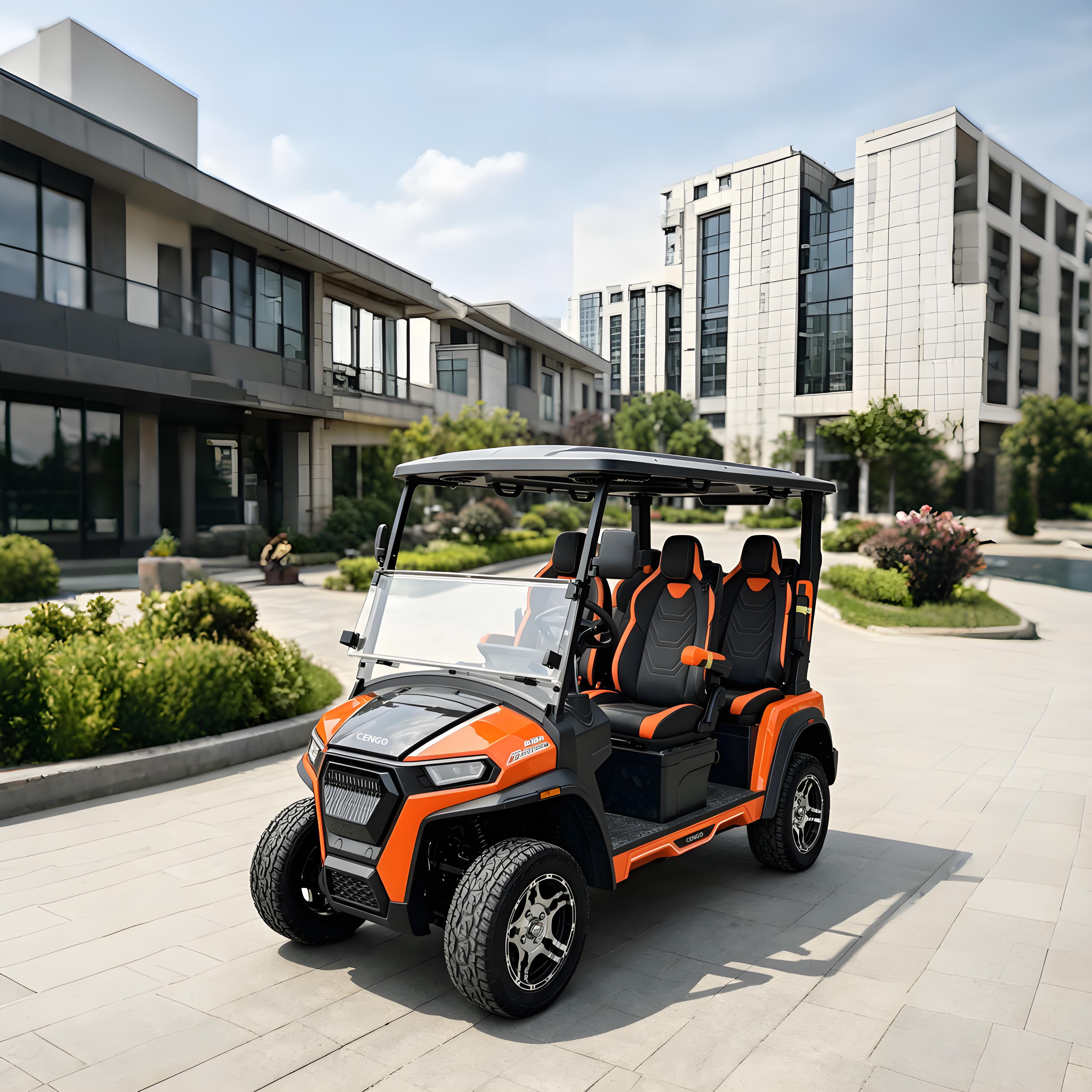
The NL-LD4.S is available in 2WD and 4WD versions. It uses totally new front and rear body designs, giving buyers two drivetrain options within the same product line.
Its quick and efficient battery charging helps reduce charging downtime during daily operation. Smart-shaped lights use LED cold illumination for sufficient brightness, which can support routes used in lower-light conditions.
Spiral damping springs help reduce vibration and shock during travel. The vehicle also uses a high-performance 48V KDS motor to provide stable and powerful uphill driving. Buyers should still match these features with route slope, passenger load, surface condition, and operating frequency before confirming an order.
Delivery Requires More Than Assembly Speed
Fast delivery depends on coordination across sourcing, production, testing, customization, and packing. For larger fleet orders, buyers should confirm the production schedule before finalizing launch dates or local sales plans.
Customization can also affect lead time. Color, logo, seat quantity, and other requested changes need to be confirmed early so that production teams can prepare materials and arrange assembly in the correct sequence.
Certification should be reviewed at the same stage. We support CE, DOT, VIN code, and LSV-related requirements, but buyers should confirm which items apply to the selected model and target market before shipment.
Warranty terms also matter in B2B fleet planning. Our battery warranty is five years, while the vehicle body warranty is 18 months. Clear warranty periods help distributors and project operators estimate service responsibilities after delivery.
What Matters When Scaling Golf Cart Production
Scaling production successfully requires more than increasing daily output. Model continuity, component availability, configuration planning, quality checks, and realistic delivery schedules all affect whether a supplier can support repeat orders. For B2B buyers, confirming these factors early can reduce scheduling uncertainty and help align vehicle supply with dealer demand or fleet deployment.
At CENGO, we manufacture golf carts and other electric vehicles for dealers, distributors, golf courses, farms, communities, hotels, airports, tourism operators, and other commercial customers.
Post time: Oct-01-2026


