
When a golf cart is used beyond smooth fairways, the frame becomes an important part of the purchasing decision. Uneven roads, slopes, repeated loading, and frequent operation place different demands on the vehicle structure. For dealers, distributors, farms, resorts, and other commercial buyers, understanding the difference between aluminum and steel frames can make an off road golf cart comparison much more meaningful.
The key is not to ask which material is universally better, but to understand how frame material affects vehicle weight, strength, maintenance, and the intended application.
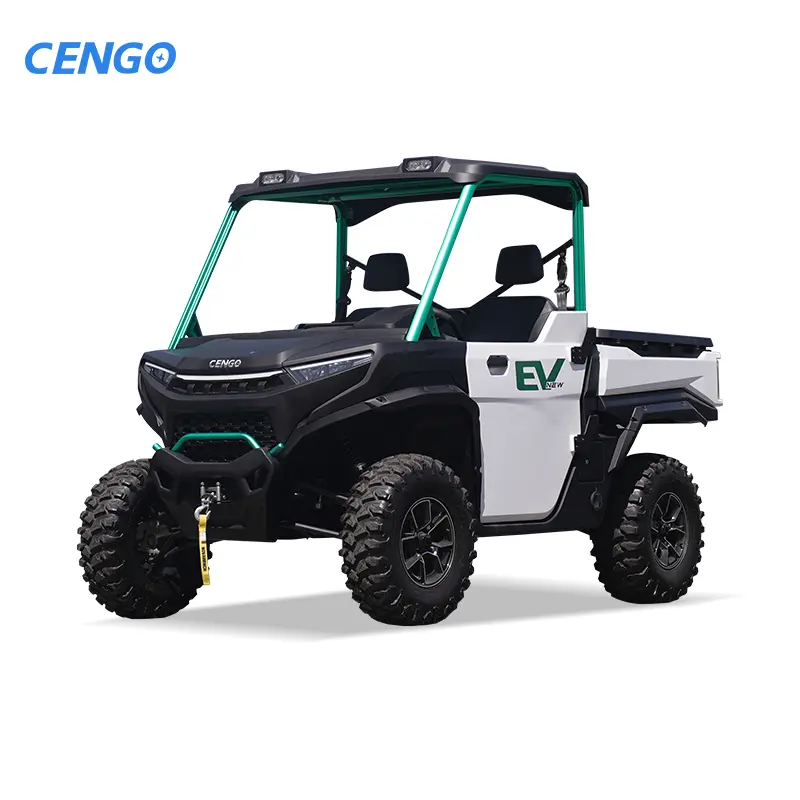
What the Frame Actually Does
The frame is the structural foundation that supports the body, suspension, drivetrain, battery system, and passenger load. During off-road operation, forces generated by bumps, braking, turning, and uneven surfaces are transferred through this structure.
That means buyers should not evaluate a frame only by its material name. Frame design, material grade, construction method, suspension layout, load requirements, and overall vehicle weight all matter.
A well-designed off road golf cart can use different frame materials depending on the intended application. This is why commercial buyers should request the complete chassis specification rather than assuming that two vehicles with similar body designs have equivalent structures.
Aluminum Frames: Weight Is a Major Factor
Aluminum frames are often considered when reducing vehicle weight is important. Lower structural weight can affect the overall mass of the vehicle, which may influence handling, transportation, and energy requirements.
At CENGO, we consider vehicle structure as part of the overall configuration when developing golf carts and utility electric vehicles for different applications. Buyers can evaluate the vehicle together with its suspension, powertrain, load requirements, and intended operating conditions.
For fleet buyers, this makes aluminum worth considering when vehicle weight is an important part of the operating calculation. However, the decision should still account for payload, terrain, suspension, and the complete vehicle configuration.
Steel Frames: A Different Structural Approach
Steel remains widely used in utility and off-road vehicle construction because it offers a familiar structural solution and can be specified in high-strength forms.
CENGO offers utility vehicles with different configurations for a range of commercial applications. When comparing aluminum and steel frames for an off-road golf cart or utility vehicle, buyers should confirm the frame material and construction of each specific model with the manufacturer. This helps ensure that the selected vehicle meets the intended payload, terrain, and operating requirements.
For buyers comparing an off road golf cart, the useful question is therefore not simply whether the frame is steel. It is whether the specific steel structure, suspension system, payload rating, and overall vehicle design correspond with the working conditions.
Weight Should Be Considered With Performance
A lighter frame does not automatically mean a vehicle will perform better in every off-road environment. The motor, battery, tires, suspension, ground clearance, wheelbase, and passenger or cargo load all interact with frame weight.
CENGO’s UTV range illustrates this broader approach. The NL-F12 uses a 48V KDS motor and spiral damping springs, while the NL-4WD.P is listed with a 15KW motor and optional lead-acid or lithium batteries. The NL-604F also uses a 48V KDS motor and offers the two battery types.
When selecting an off road golf cart, buyers should therefore evaluate the complete powertrain rather than treating frame material as an isolated performance specification.
Match the Frame to the Application
Different commercial users can have very different priorities. A resort may value a lighter vehicle and passenger comfort, while a farm may place greater emphasis on utility work, repeated loading, and rough operating conditions. A distributor may instead need multiple configurations to serve different customer segments.
This is where an experienced golf cart manufacturer becomes useful during specification discussions. Instead of starting with a fixed material preference, buyers can describe their terrain, passenger capacity, payload, operating hours, and expected usage. The supplier can then identify which frame and vehicle configuration correspond with those requirements.
We also offer different vehicle categories, including golf carts, UTVs, sightseeing vehicles, and functional electric vehicles, so commercial projects can be evaluated according to application rather than one standard vehicle format.
Look at the Complete Chassis
Frame material is only one part of a chassis specification. Buyers comparing aluminum and steel should also look at how the frame works with the suspension, braking system, tires, ground clearance, and expected payload. These factors can change how the vehicle handles different surfaces and loads.
It is also useful to ask how the selected frame is protected and supported over time. Corrosion protection, replacement components, repair procedures, warranty coverage, and future parts availability can all affect the practicality of a frame choice, particularly for vehicles expected to remain in service for several years.
At CENGO, we treat frame selection as part of the overall vehicle configuration rather than an isolated material choice. Our range includes vehicles with different frame configurations, allowing commercial buyers to review the chassis together with the intended application and other vehicle specifications.
Post time: Sep-17-2026


