
A fleet vehicle is rarely purchased simply because it looks attractive in a product catalog. Dealers, resorts, communities, hotels, airports, and commercial properties usually have a specific operating environment in mind. Road conditions, passenger requirements, local regulations, charging arrangements, and branding can all influence the final specification.
This is where factory customization becomes useful. Instead of treating an electric street legal golf cart as a fixed product, buyers can start with a suitable platform and determine which equipment and design elements match the intended application.
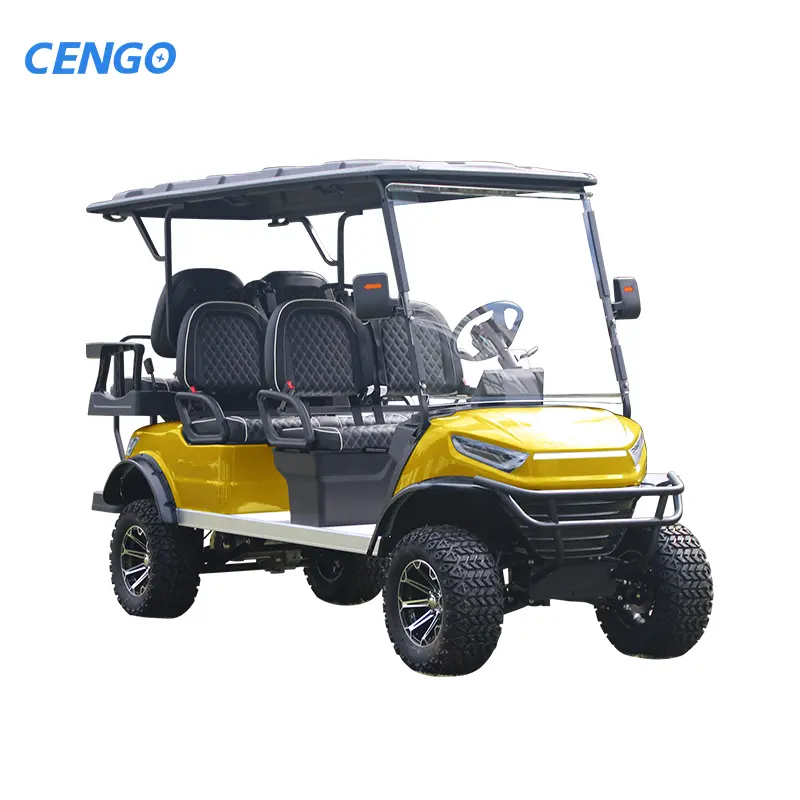
Start With the Road-Use Requirement
The first question should be whether the vehicle is genuinely intended for public-road operation. “Street legal” is not a universal specification because registration, equipment, speed limits, insurance, and other requirements can vary by jurisdiction.
Our NL-JZ4+2G is presented as a street legal golf cart, with features including hydraulic braking, four-wheel disc brakes, an electronic parking brake, and other road-use-oriented components. Buyers should still verify the exact legal requirements in their destination market before placing an order.
For a street legal golf carts manufacturer, this distinction is important. Factory configuration should begin with the regulations and operating conditions of the target market, rather than adding accessories without considering how the complete vehicle will be used.
Select the Powertrain Around the Route
Motor and battery specifications should be considered together with terrain and passenger load. A vehicle operating on flat community roads has different demands from one regularly climbing slopes around a resort, residential development, or large commercial property.
The NL-JZ4+2G uses a 48V KDS motor and is listed with 6.67 hp and 20% grade ability. Its published maximum speed is 15.5 mph. These figures give fleet buyers concrete points for comparing the vehicle with their route requirements instead of relying on general descriptions such as “high performance.”
Battery selection is another factory-level decision. We lists both lead-acid and lithium batteries as optional on this model. A buyer can therefore consider charging schedules, maintenance preferences, expected utilization, and local service conditions before confirming the final electric street legal golf cart configuration.
Suspension Should Match the Operating Surface
Ride quality depends heavily on suspension design, especially when a cart moves between paved roads, uneven surfaces, slopes, and mixed-property routes. Buyers should examine the actual suspension components instead of assuming that two vehicles with similar body designs will behave in the same way.
The NL-JZ4+2G uses a double-cantilever front suspension with coil springs and hydraulic shock absorbers. Its rear system combines an integral rear axle with coil spring and hydraulic shock absorbers. These components are relevant when assessing handling and ride characteristics in a commercial fleet.
Customize the Driver Interface
Factory customization does not have to focus only on the exterior. The driver’s interaction with the vehicle can also affect daily usability. Controls should be easy to understand, while frequently used connections and switches should remain accessible.
The NL-JZ4+2G has an injection-molded instrument panel, a combination switch, gear selector, cup holder, USB and Type-C ports, and an optional one-button start system with remote keyless and passive keyless entry.
Exterior Options Can Serve a Business Purpose
Appearance matters in commercial fleets because vehicles often become visible parts of a property or brand. A resort may want a coordinated appearance, while a dealer may need several body or color combinations to address different customer segments.
Our broader product information describes customization involving colors, tires, logo and number of seats. This gives buyers more scope to develop an electric street legal golf cart around a specific project instead of relying entirely on an off-the-shelf appearance.
However, customization should remain connected to the operating requirement. Adding equipment increases complexity, weight, and potentially maintenance needs, so buyers should distinguish between features that solve a real fleet requirement and features added only for appearance.
Check Braking and Steering Before Ordering
Braking and steering should be considered alongside the vehicle’s intended operating environment. For fleet buyers, the key is to confirm that the selected configuration can support expected passenger loads, road conditions, and routine driving patterns.
The NL-JZ4+2G includes dedicated braking and steering systems designed around its road-use configuration. Buyers should review the exact specifications and applicable requirements before ordering, particularly when vehicles will operate in areas shared with pedestrians or other traffic.
Treat Factory Options as a Fleet Decision
A customized vehicle should still fit the wider fleet strategy. Dealers and distributors may need repeatable specifications that can be reordered, while hotels, airports, communities, and resorts may prioritize consistent appearance and operating characteristics across multiple units.
We also recommend evaluating warranty terms alongside customization. CENGO currently states that batteries carry a five-year warranty and vehicle bodies an 18-month warranty. The exact coverage should be confirmed according to the selected model, configuration, and sales agreement.
A useful specification checklist therefore includes local road regulations, passenger capacity, speed requirements, grade conditions, battery type, charging arrangements, suspension, braking, steering, exterior design, accessories, and warranty coverage.
For commercial buyers, factory customization is useful when each selected option has a clear purpose. Starting with the intended road environment, then reviewing the powertrain, suspension, controls, exterior options, and compliance requirements, can make the final vehicle specification more practical. CENGO supports this process with configurable electric golf cart solutions for different commercial applications.
Post time: Sep-10-2026


