
How long does a golf cart last? On average, a well-maintained golf cart runs 15 to 40 years, depending on power type, usage, and maintenance. How long does an electric golf cart last? Typically 20 to 40 years, thanks to a simpler drivetrain. How long does a gas golf cart last? Usually 15 to 30 years, since engine wear sets the limit. This 2026 guide covers average lifespans, key factors, and tips to help your cart last longer.
How Long Does a Golf Cart Last? Electric vs. Gas Lifespan Comparison
When assessing the lifetime value of a fleet, understanding the core differences between electric and gas golf carts is essential for commercial operators, distributors, and users alike.
| Evaluation Metric | Electric Golf Carts | Gas Golf Carts | Lifespan Winner |
| Typical Overall Lifespan | 20 to 40 years | 15 to 30 years | Electric (simpler mechanics with fewer moving parts) |
| Core Powertrain Lifespan | Motor: 15 to 20+ years | Engine: 1,500 to 2,500 running hours | Electric (brushless golf cart motors reduce friction wear) |
| Major Wear & Replacement Part | Battery pack (Replacement: $600–$1,600 lead-acid; $2,500–$4,500 lithium) | Engine rebuild (Replacement: $800–$1,500) | Gas (easier immediate engine repairs, but more frequent upkeep overall) |
| Annual Maintenance Cost | $300 to $600 | $500 to $1,200 | Electric (No oil, spark plugs, filters, or belts to change) |
| Per Charge/Tank Cost | $0.50 to $1.50 per charge | $15 to $25 per fuel tank | Electric (extremely low daily operating cost) |
1. How Long Does an Electric Golf Cart Last?
Electric golf carts can last for 20 to 40 years with proper use and maintenance. They excel in longevity due to their streamlined drivetrains. Lacking complex internal combustion engines, exhaust setups, and complex transmission systems, they experience far less mechanical stress.
- ● Motors (15 to 20+ Years): Brushless golf cart motors are exceptionally durable, generating minimal heat and friction. Older DC motors are also robust, but their brushes require regular replacement, typically every 12–24 months under high-frequency use.
- ● The Battery Lifeline (3 to 12+ Years): This is the most crucial replacement expense. Traditional flooded lead-acid batteries last 3 to 5 years (500–700 charge cycles). Upgrading to lithium-ion batteries extends battery life to 8 to 12+ years (2,000 to 5,000+ cycles) while offering maintenance-free performance.
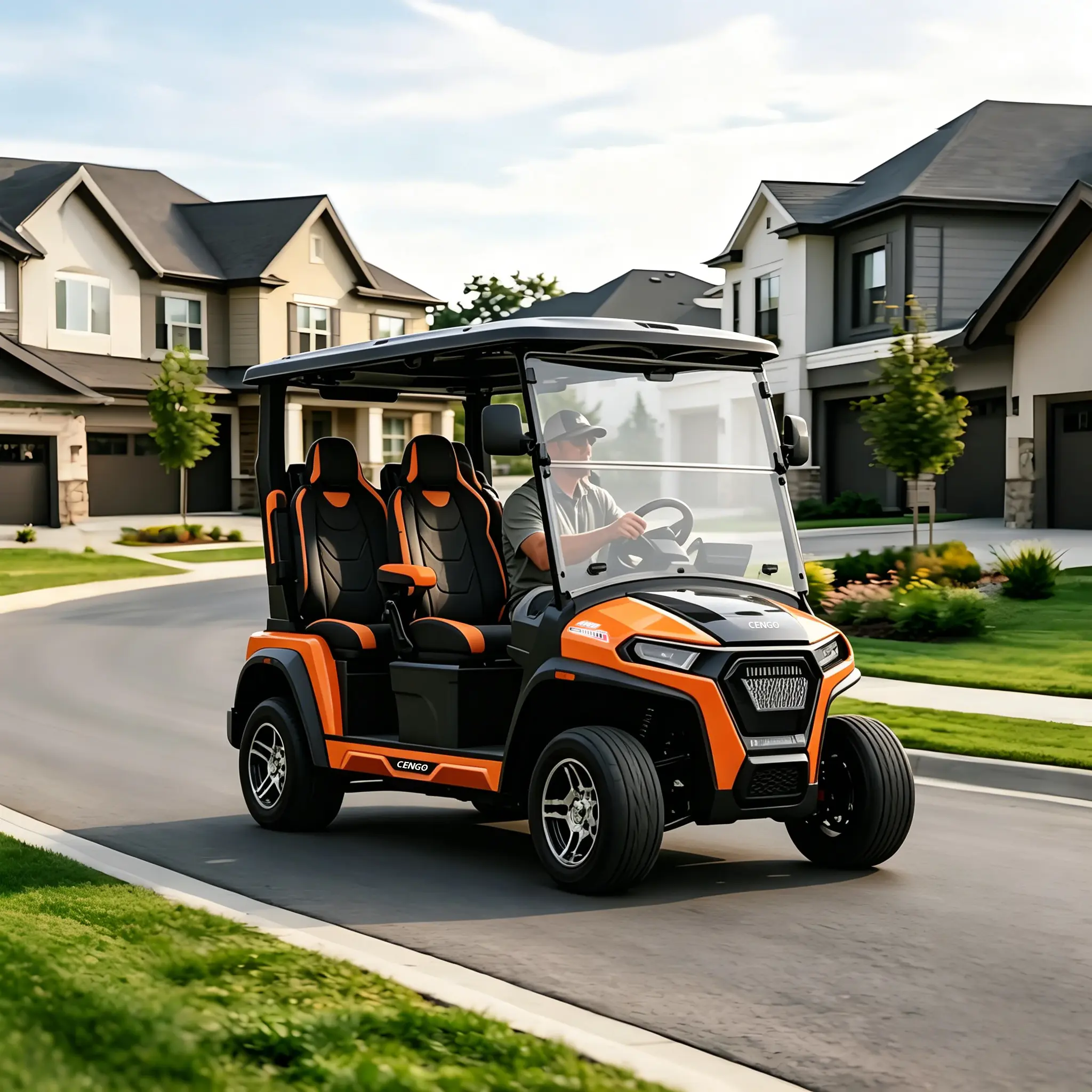
CENGO electric golf cart model: NL-LD4.S
2. How Long Does a Gas Golf Cart Last?
Gas golf carts can last for 15 to 30 years. While these models are highly resilient under specific extreme conditions, their physical wear points are much higher.
- ● Engine Hours (1,500 to 2,500 Hours): A gas engine‘s lifespan is calculated in operational hours rather than years. For a light personal user, this can translate to 15 to 30 years of use. For commercial operators running high-frequency shifts, the engine may reach its limit and require a rebuild or replacement much sooner, often within 2 to 5 years (depending on accumulated hours).
- ● Maintenance Intensity: Gas carts require frequent tune-ups, oil changes, spark plug replacements, and belt adjustments, raising the overall cost of ownership. However, they remain highly valuable for remote off-grid environments, extreme cold climates, and non-stop long-distance haulage.
Key Factors Affecting Your Golf Cart‘s Lifespan
Regardless of the brand, several real-world operational factors dictate whether your vehicle lasts closer to 10 years or 40 years.
- ● Chassis and Frame Materials: The frame is the literal backbone of the vehicle. Premium manufacturers utilize corrosion-resistant aluminum frames that can easily endure 30 to 40+ years in coastal, humid, or high-salinity areas. Conversely, standard steel frames may suffer severe structural rust within 8 to 15 years if exposed to saltwater or damp storage.
- ● Driving Terrain: Regularly climbing steep hills, navigating rough construction gravel, or operating in muddy off-road conditions places heavy stress on the suspension, motor, and steering components compared to flat, paved roads.
- ● Frequency and Load Capacity: Consistently overloading a vehicle beyond its weight limits places excessive strain on the battery, demands more power output, and accelerates wear and tear on the engine, transmission, and tires.
- ● Environmental Exposure: Leaving carts directly under intense UV sunlight, heavy rain, or sub-zero winter temperatures degrades plastic body panels, cracks leather seats, and corrodes exposed electrical terminals.
- ● Maintenance Routine and Repair Quality: Consistent maintenance, timely repairs, and the use of quality replacement parts play a key role in extending a golf cart’s lifespan. Neglecting routine service or using low-quality repairs can accelerate wear and shorten the vehicle’s service life.
8 Golden Rules to Make Your Golf Cart Last Longer
Implementing a proactive preventative maintenance routine can add longer productive service life to your golf cart fleet.
1. Always Charge After Use (Electric): Plug in your electric cart after every trip. Avoid letting battery capacity drop below 20% to prevent permanent chemical damage.
2. Top Off Flooded Batteries Weekly: If using lead-acid batteries, check electrolyte levels regularly. Only add distilled water after the batteries are fully charged, ensuring the fluid level remains within the recommended range.
3. Keep Terminals Clean: Clean off green or white acidic buildup on battery terminals using a mixture of baking soda and water, then apply an anti-corrosion spray.
4. Check Tire Pressure Fortnightly: Maintain tire pressure within the manufacturer‘s recommended range, usually 15–25 psi, although some tires may require higher pressures, such as 40 psi. Low tire pressure increases rolling resistance, reducing battery range and causing uneven tire wear.
5. Change Gas Engine Oil Every 125 Hours: For gas carts, change the oil every 6 months or 125 hours of operation. Follow the manufacturer’s recommended oil type, such as 10W-30 or SAE 30, to minimize engine wear.
6. Protect Golf Carts from the Elements: Store vehicles in a garage, warehouse, or under a heavy-duty, UV-resistant waterproof cover.
7. Optimize Off-Season Storage: When winterizing, charge lead-acid batteries fully and top them off periodically. For lithium batteries, store them at 50%–70% charge in a dry area (0 ℃ to 20℃) and disconnect the main power switch.
8. Upgrade to Lithium-Ion Powertrains: Transitioning older electric fleets to lithium batteries is the single most effective upgrade. It sheds up to 70% of battery weight, instantly reducing mechanical wear on the chassis and suspension.
Replace or Repair: How to Decide?
For fleet managers at resorts, industrial factories, or golf courses, knowing when to retire a vehicle is a major financial decision.
- ● When to Repair: If the frame and chassis are structurally sound, and the issue is isolated to a single component (such as a worn brake shoe, a faulty controller, or an aging battery pack), a repair or upgrade is highly cost-effective.
- ● When to Replace: If the structural frame suffers deep, penetrative rust or structural cracking, the vehicle is no longer safe to operate. Additionally, if the cost of repairing multiple failed components exceeds 50% of the cart‘s market value, investing in a new, highly efficient vehicle is the smarter financial move.
Upgrade with CENGO: Reliable Golf Carts and Customizable Solutions
If you decide that replacing or expanding your fleet is the best step forward, CENGO delivers the ultimate combination of structural durability and cutting-edge performance.
At CENGO, we build high-performance electric vehicles designed to withstand the most demanding commercial environments. Our lineup of CENGO Golf Carts is engineered for demanding commercial use, featuring 48V or higher-performance 72V motor options for stable, powerful performance on inclines, intelligent on-board chargers for fast turnaround between shifts, four-wheel hydraulic disc brakes with an electronic parking brake, and the choice of lead-acid or lithium-ion battery packs to match your budget and duty cycle.
Whether you are running a golf course, a resort community, a school campus, an airport, or a commercial development, our carts are built to minimize downtime and maximize your operational lifespan.
Premier ODM&OEM Capabilities for Global B2B Partners
We understand that golf course operators, distributors, real estate community developers, and government projects have highly specific requirements. That is why CENGO stands out as a leading global partner for custom golf cart solutions:
- ● Custom Configurations: Tailor passenger capacities (from 2 to 8+ seaters), utility cargo beds, lift kits, and heavy-duty suspension systems to match your unique operational demands.
- ● Bespoke Branding & Styling: Match your brand identity with custom colorways, seat configurations, and logo placement, so every unit in your fleet reflects your brand consistently.
- ● Global Compliance & Standards: Our engineering team ensures your custom fleets meet local road-legal regulations, safety certifications, and commercial standards.
Conclusion
Understanding the answer to “how long does a golf cart last” allows you to make strategic purchasing decisions and execute maintenance plans that protect your bottom line. While gas models offer high-end, heavy-duty utility, modern electric carts powered by lithium batteries represent the future of long-term sustainability and reduced operating costs.
Are you looking to upgrade your resort, facility, or distribution business with highly durable, state-of-the-art electric fleets? Explore our full range of CENGO Golf Carts or reach out to our team today to discuss our custom OEM solutions tailored to your unique commercial needs.
Post time: Aug-12-2026


