
Selecting a suitable commercial vehicle requires careful evaluation of practical factors instead of focusing only on appearance or price. Battery performance, load capacity, and driving range are three important areas that influence daily operation. When we compare an electric utility vehicle, we usually consider how these specifications match different working environments, from golf courses and resorts to farms and outdoor transportation projects.
For professional buyers, the right vehicle should support stable operation, comfortable driving, and efficient management. Understanding these key points can help distributors, fleet operators, and commercial users make more suitable purchasing decisions based on real application needs.
Battery Performance Determines Daily Operating Efficiency
Battery selection is an important step when evaluating an electric vehicle for commercial use. Different working environments require different energy demands. A vehicle used for passenger transportation in a resort may have different charging requirements compared with one used for carrying equipment in outdoor areas.
When we review battery performance, we focus on charging efficiency, working time, and compatibility with the motor system. A well-matched battery and power system can help users arrange daily schedules more effectively and reduce unnecessary interruptions during operation.
Charging speed is also a practical concern for many buyers. In busy locations such as golf courses, hotels, and tourism areas, vehicles may need to operate frequently throughout the day. Efficient charging helps improve vehicle availability and supports continuous transportation tasks.
Our NL-F12 is designed with a quick and efficient battery charging system to support better daily use. This feature helps reduce charging waiting time and provides more flexibility for users who need regular vehicle operation.
Battery performance should also be considered together with maintenance requirements. For businesses managing multiple vehicles, simple operation and stable battery performance can influence long-term management costs. This is why professional buyers often evaluate the complete power system rather than one single specification.
Load Capacity Should Match the Working Application
Load capacity is another important factor when comparing an electric utility vehicle. Before purchasing, buyers should consider what the vehicle will transport, how often it will be used, and what type of environment it will operate in.
For example, farms may require vehicles that can carry tools and materials, while hotels or communities may focus more on passenger transportation. Golf courses usually need a balance between comfortable driving and practical carrying ability for daily maintenance tasks.
Vehicle structure plays an important role in supporting load requirements. The frame, suspension, and overall design can influence stability when carrying passengers or equipment. A suitable structure helps maintain smooth operation on different surfaces.
The NL-F12 uses spiral damping springs to reduce vibration and shocks during driving. This design supports a more comfortable experience when the vehicle moves through outdoor environments with uneven roads or changing conditions.
When selecting a vehicle, buyers should avoid choosing based only on maximum capacity. A proper match between actual workload and vehicle design can improve efficiency and reduce unnecessary pressure on the vehicle system.
Range Evaluation Depends on Real Usage Conditions
Driving range is one of the key specifications that commercial users review before purchasing. The required range depends on factors such as operating distance, road conditions, passenger load, and working frequency.
A vehicle for a small community may need shorter travel distances, while a tourism area or large outdoor project may require longer operation periods. Therefore, buyers should evaluate range based on their daily routes instead of only looking at a single number.
Motor performance also affects how effectively a vehicle uses its available power. When vehicles operate on slopes or outdoor terrain, stable power output becomes an important consideration. The motor system should provide suitable performance for different working conditions.
The NL-F12 is equipped with a high-performance 48V KDS Motor, which supports stable and powerful uphill driving. This configuration helps the vehicle handle changing terrain while maintaining a comfortable driving experience for operators and passengers.
Lighting systems are also useful for vehicles that work during different periods of the day. The model uses smart LED cold illumination lights to provide sufficient brightness and improve visibility in outdoor applications.
Considering Design, Comfort, and Supplier Capability
Although battery, load capacity, and range are the main comparison factors, design and supplier support also influence purchasing decisions. Commercial buyers often consider appearance, customization options, delivery time, and after-sales support before placing orders.
For distributors and outdoor brands, vehicle appearance can affect market acceptance. A modern body design can help products fit different application scenes, including resorts, communities, and tourism projects. We continue updating our vehicle designs to meet changing market needs.
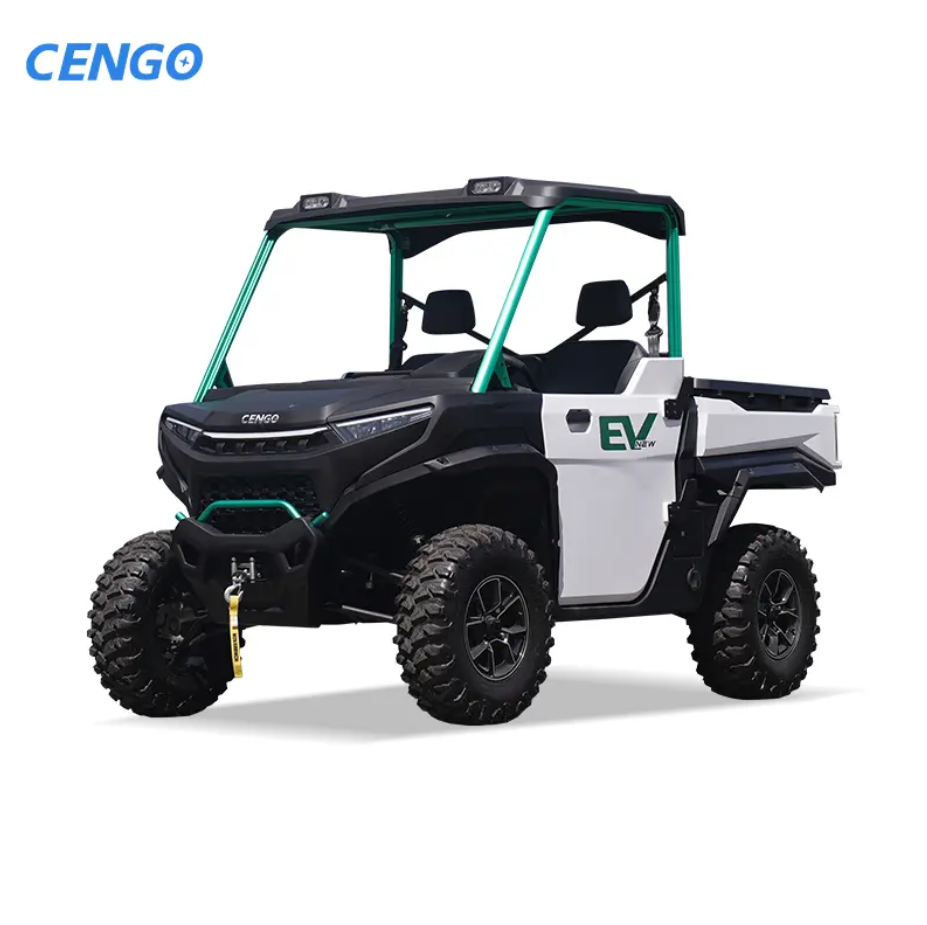
CENGO develops vehicles with private mold body designs and introduces new body styles regularly. The NL-F12 features totally new front and rear body designs, combining updated appearance with practical usage requirements for commercial applications.
Production capability is another factor that buyers should evaluate. Stable manufacturing processes and reasonable delivery schedules are important for distributors and project customers who need reliable supply. Certification information, including CE, DOT, VIN code, and LSV certification, also supports different market requirements.
Making a Better Purchase Decision for Commercial Use
Before choosing an electric utility vehicle, buyers should connect technical specifications with their actual application. Battery charging efficiency, load capacity, and driving range should work together to support daily transportation needs.
A suitable vehicle is not only about performance numbers. Comfort, safety features, maintenance convenience, and supplier service also affect the overall ownership experience. Careful comparison helps businesses select vehicles that fit their operation plans.
CENGO focuses on manufacturing golf carts and other electric vehicles, providing customized designs, stable production capacity, and professional support for distributors, golf courses, outdoor projects, hotels, airports, and tourism applications.
Post time: Jul-14-2026


