
When a dealer or fleet operator is sourcing passenger vehicles, the choice between new and used equipment involves more than the purchase price. A used vehicle may appear attractive because of its lower upfront cost, while a new 4 seater golf cart offers a known configuration and a fresh service history. The right comparison should consider acquisition cost, condition, maintenance, availability, customization, and expected operating hours.
For businesses purchasing several vehicles, these factors become even more important. A golf course may use carts every day, while a hotel, airport, resort, or community operator may require regular passenger transportation. Understanding what to inspect and calculate can make the purchasing process more systematic.
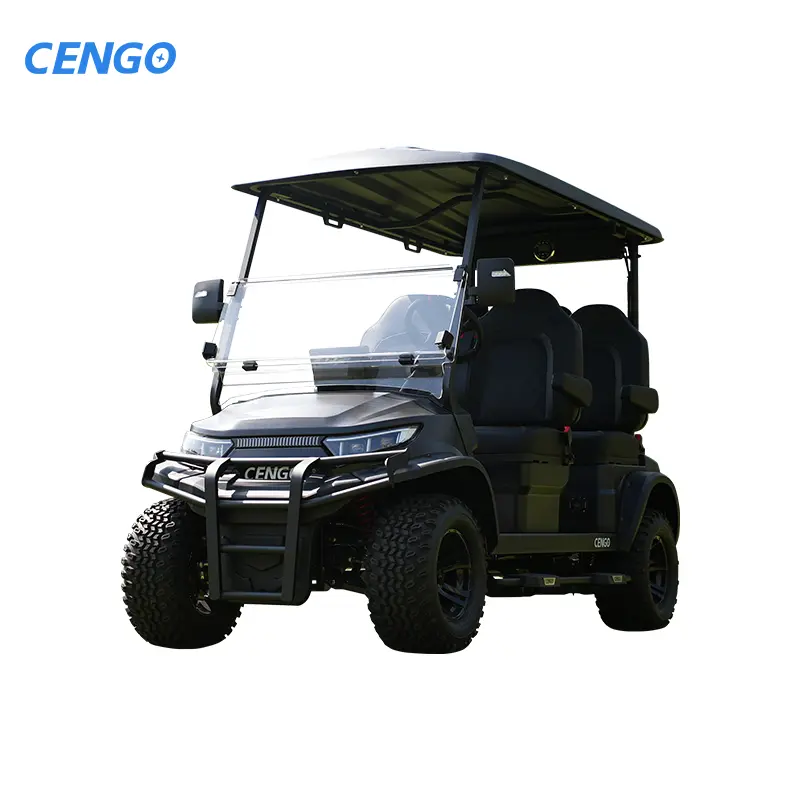
Start With the Real Cost of a 4 Seater Golf Cart
The quoted purchase price is only one part of fleet cost. Used vehicles may require replacement batteries, tires, suspension components, brakes, body panels, or electrical parts after purchase. These expenses can narrow the apparent price difference between a used unit and a new vehicle.
A new 4 seater golf cart generally gives buyers clearer information about its original configuration, specifications, and warranty coverage. CENGO lists a five-year battery warranty and an 18-month vehicle-body warranty. Buyers should confirm the applicable warranty terms for their selected model and order before purchasing.
Inspect Battery Condition Before Buying Used
Battery condition deserves particular attention because it directly affects electric vehicle operation. With a used cart, the buyer needs to know the battery type, age, charging history, current condition, and whether replacement will be necessary soon.
This is especially relevant when comparing older lead-acid vehicles with newer configurations. Our current four-seat range includes models where lead-acid and lithium batteries are listed as options. Therefore, buyers comparing 4 seat golf carts for sale should identify the exact battery configuration rather than judging vehicles only by their appearance.
Check Configuration Against the Intended Route
A four-seat layout does not automatically mean that every vehicle suits the same application. Fleet buyers should examine motor output, suspension, braking, tires, ground clearance, and battery configuration according to the environment where the vehicle will operate.
For example, a golf course with uneven terrain may have different requirements from a hotel transporting guests on paved internal roads. Our current 4 seater golf cart category includes several configurations, including the NL-LD4.S, NL-WD2+2.G, NL-LCB4G, NL-LC4+2, and street-legal-oriented models.
Used Vehicles Need a More Detailed Inspection
When evaluating 4 seat golf carts for sale in the used market, buyers should inspect the frame, body panels, suspension, steering, brakes, tires, wiring, lights, seats, and charging system. A test drive should also cover acceleration, braking, steering response, unusual vibration, and noise.
Service records are valuable because they reveal how the vehicle was operated and maintained. A cart that has worked lightly on a private property may have a very different condition from one used continuously in a busy resort. Without reliable records, the buyer may need to budget for more uncertainty.
New Vehicles Can Simplify Fleet Standardization
Fleet standardization is another consideration that is sometimes overlooked. When a business purchases several new vehicles with the same or closely related configurations, drivers and maintenance personnel can become familiar with common controls, components, and operating procedures.
This matters particularly to dealers and distributors managing multiple units for commercial customers. A standardized 4 seater golf cart range can make product selection easier when different customers have similar passenger-transport requirements. Our current portfolio includes multiple electric golf cart configurations as well as sightseeing, functional, and UTV models.
Customization Changes the Comparison
Used vehicles are normally limited by the configuration already available. A buyer may need to accept the existing body color, seating arrangement, tires, accessories, and equipment, unless additional modification is carried out after purchase.
New vehicles offer more room to specify requirements before production. At CENGO, customization can include colors, tires, logos, and seat numbers, allowing commercial buyers to align vehicles with their operating or branding requirements. This can be particularly relevant when dealers want a consistent appearance across a product range.
Consider Supply, Support, and Future Use
A used cart can make sense when a buyer needs a specific vehicle quickly and has the technical capability to inspect and maintain it. A new 4 seater golf cart may be more suitable when predictable specifications, warranty support, customization, and consistent fleet configuration are higher priorities.
There is no single calculation that applies to every fleet. Buyers should compare the purchase price with expected repairs, battery replacement risk, downtime, warranty coverage, and the number of operating hours expected each year. This gives a more useful picture than comparing two vehicle prices alone.
For businesses reviewing 4 seat golf carts for sale, a simple checklist can make the decision clearer: identify the intended route, calculate daily utilization, inspect battery condition, verify specifications, estimate maintenance costs, and confirm available warranty and support. At CENGO, we manufacture electric golf carts and other electric vehicles with multiple configurations and customization options for dealers, distributors, golf courses, hotels, airports, resorts, and other commercial applications.
Post time: Sep-08-2026


