
Large commercial spaces need cleaning methods that can handle regular maintenance tasks with stable operation. A ride on floor scrubber is a powered cleaning machine that allows operators to sit on the equipment while completing floor washing and drying work. It combines several functions, including water distribution, floor brushing, and waste water collection. At CENGO, we understand that commercial environments often require efficient mobility solutions, so we pay attention to how equipment design supports daily operations in different locations.
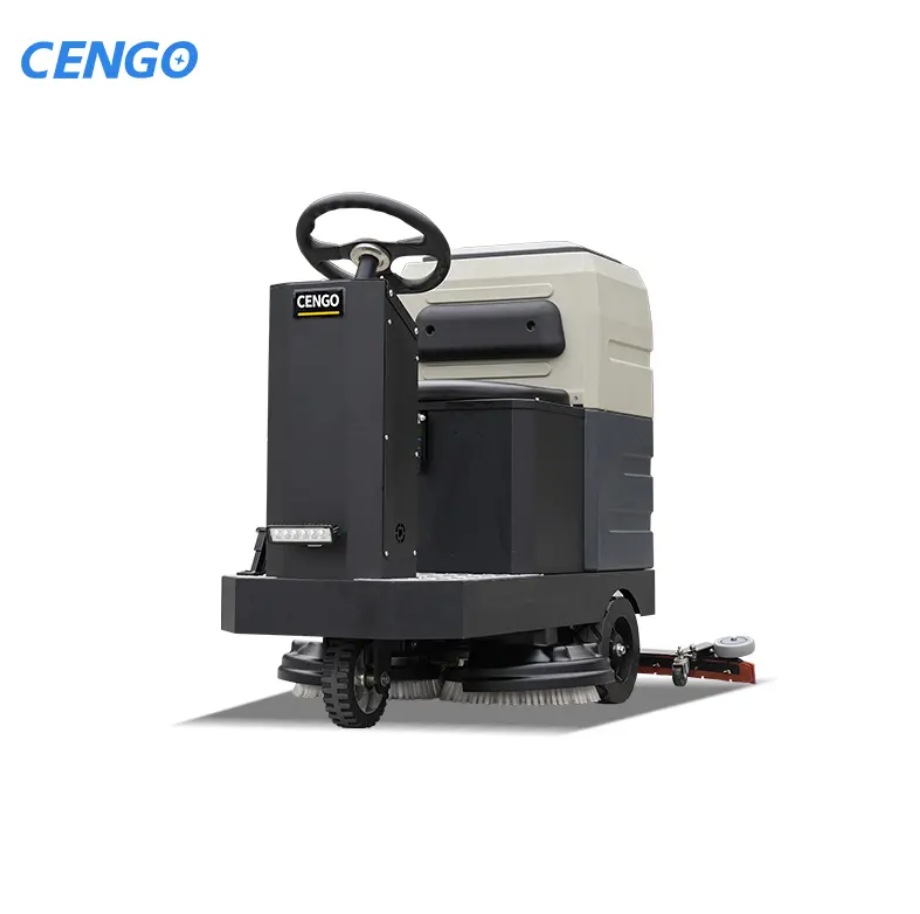
Understanding the Structure of a Ride-On Cleaning Machine
A ride-on floor cleaning machine usually includes a driving seat, control panel, brush system, water tank, suction system, and battery unit. Each part works together to complete the cleaning process. The operator controls the machine direction and cleaning settings while the equipment moves across the floor.
The cleaning process normally begins when clean water and detergent are released onto the surface. Rotating brushes then remove dust, stains, and other residues. After cleaning, the suction system collects used water to leave the floor in a cleaner condition.
Compared with traditional manual cleaning methods, this type of equipment can help reduce repeated physical work. It is often used in places where large floor areas need regular maintenance, such as shopping centers, warehouses, transportation facilities, schools, and commercial buildings.
How the Working Process Improves Cleaning Efficiency
The operation principle of a ride on floor scrubber is based on combining several cleaning steps into one workflow. Instead of using separate tools for washing and drying, the machine completes multiple tasks during movement. This integrated approach helps reduce manual steps and allows operators to manage larger areas with a more consistent cleaning process.
The brush pressure and driving speed all influence cleaning performance. Different floors may require different settings. For example, smooth floors in commercial facilities may need regular polishing and cleaning, while outdoor areas may require stronger dirt removal capability. Adjusting these functions according to floor conditions can help achieve suitable cleaning results without unnecessary resource use.
Battery performance is also an important factor for electric equipment. A stable power system helps support continuous operation and reduces interruptions caused by frequent charging. For commercial users, selecting equipment based on actual working conditions can improve daily management. Considering factors such as working hours, floor layout, and maintenance plans can also help businesses create a more practical cleaning strategy.
The Connection Between Mobility Design and Commercial Use
Many commercial environments need vehicles and equipment that can support visitor movement, staff transportation, and facility management. This is why mobility design has become an important consideration in many projects. Choosing suitable electric vehicles also requires attention to comfort, operating conditions, and daily usage requirements.
In addition to cleaning-related solutions, we also develop electric vehicles for professional applications. Our NL-V6S electric golf cart is designed for golf courses, hotels, resorts, schools, real estate projects, communities, airports, villas, railway stations, and commercial establishments.
The model features a totally new front and rear body design, helping customers create a more suitable appearance for different environments. It also uses smart lights with LED cold illumination to provide sufficient brightness during operation. These design details support practical use in outdoor and commercial spaces. The vehicle configuration can also be considered based on passenger capacity, travel distance, and the specific requirements of each application area.
Choosing Equipment Based on Real Application Needs
When businesses select cleaning equipment or commercial vehicles, they usually consider several factors together. Working environment, operation frequency, maintenance requirements, and user comfort all affect the final decision.
For a ride on floor scrubber, buyers often focus on cleaning coverage, battery capacity, control convenience, and after-sales support. A suitable machine should match the size and requirements of the application area rather than simply focusing on individual specifications.
The same principle applies to electric transportation products. For example, our NL-V6S uses spiral damping springs to reduce vibration and shocks during driving. It is also equipped with a high-performance 48V KDS Motor to provide stable and powerful uphill performance for different outdoor conditions.
Conclusion
Commercial buyers usually need solutions that can support long-term operation. Product reliability, delivery schedule, customization ability, and service support are important parts of the purchasing process.
With different project requirements, businesses may need flexible product options. Some locations focus on appearance and passenger experience, while others pay more attention to working efficiency and operating costs. Understanding these differences helps companies make more suitable choices.
A well-designed ride on floor scrubber provides a practical approach for large-area cleaning by combining movement and cleaning functions in one system. In the same way, commercial electric vehicles need to balance design, performance, and application requirements.
At CENGO, we provide commercial electric vehicles with CE, DOT, VIN code, and LSV certifications, supported by fast delivery, a daily production capacity of 60–80 units, customized solutions, five-year battery warranty, and eighteen-month vehicle body warranty. We are CENGO, a manufacturer specializing in golf carts and electric vehicles for distributors, golf courses, hotels, communities, and other professional commercial applications.
Post time: Jul-03-2026


