
How long do lithium golf cart batteries last? For golf course operators, hotel fleets, and buyers comparing electric golf carts, the answer shapes purchasing decisions for years. Whether upgrading an existing fleet or selecting a cart at the buying stage, understanding golf cart battery lifespan helps operations budget accurately. Lithium battery packs typically outlast lead-acid batteries by several years, making them the smarter long-term investment for high-use commercial fleets.
How Long Do Lithium Golf Cart Batteries Last?
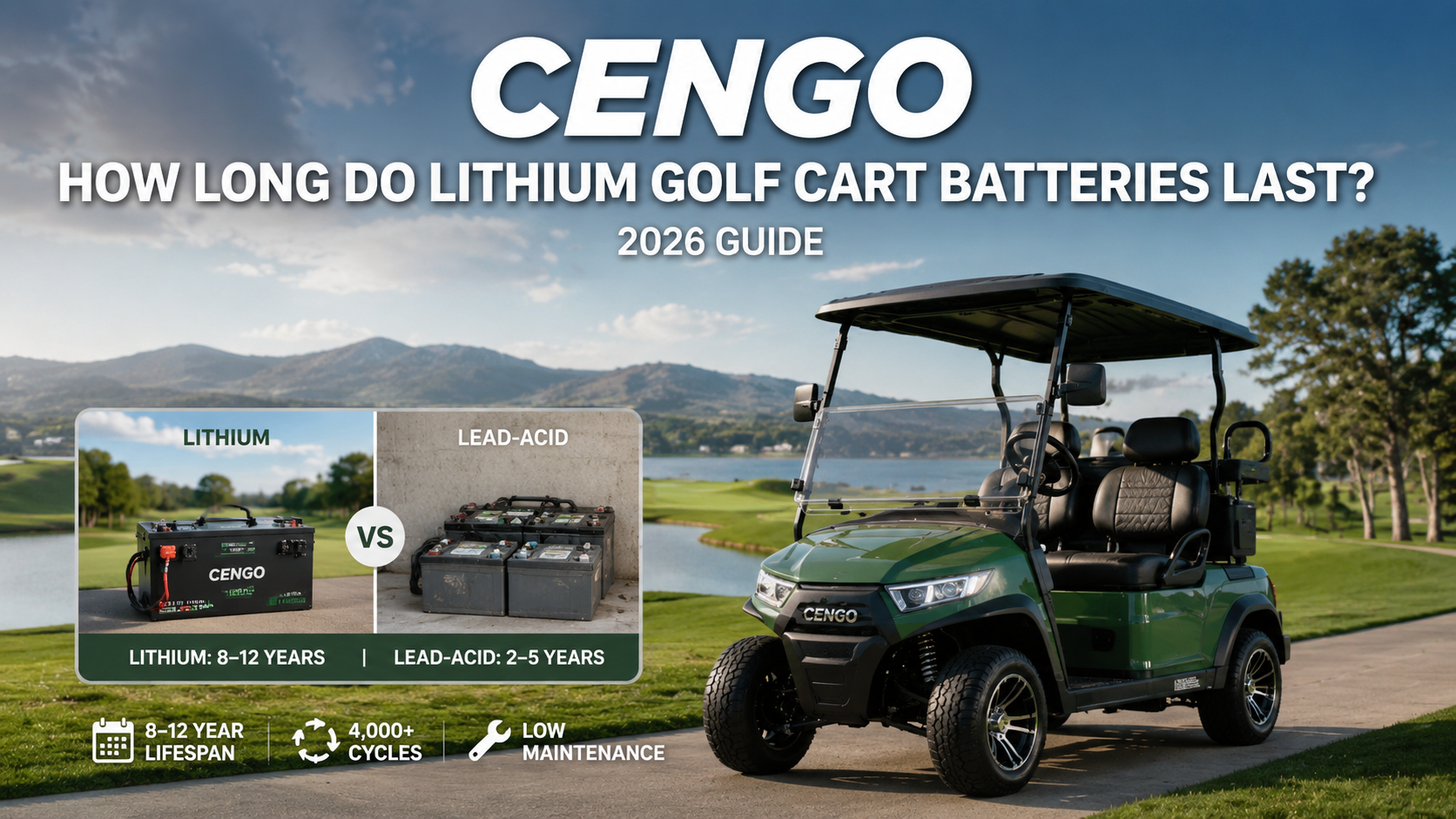
Most lithium golf cart batteries last between 8 and 12 years. Under light or moderate use, some private owners report lifespans approaching the upper end of that range, while high-cycle commercial fleets typically land closer to 8 years. Most quality lithium golf cart batteries use LiFePO4 (lithium iron phosphate) cells, which generally deliver 2,000 to 5,000 full charge-discharge cycles before capacity noticeably declines.
Lead-acid batteries tell a very different story. Here’s how the two compare side by side:
| Metric | Lithium | Lead-Acid |
| Typical lifespan | 8–12 years | 2–5 years |
| Cycle life | 2,000–5,000 cycles | 200–1,000 cycles |
| Charging time | 2–4 hours | 8–10 hours |
| Weight | Up to 50–70% lighter | Heavier baseline |
| Maintenance | Virtually maintenance-free | Watering & terminal care needed |
So anyone asking how long electric golf cart batteries last will get very different answers depending on the chemistry inside the pack. For operators running carts daily across a golf course, resort, or industrial park, that gap translates directly into fewer replacement cycles, less downtime, and a lower total cost of ownership over a fleet’s operating life.
What Affects Golf Cart Battery Lifespan?
Several variables influence how long a lithium battery actually performs in the field:
l Usage frequency – Daily commercial use adds cycles faster than occasional personal use, which can shorten calendar life.
l Depth of discharge – Regularly draining a battery below 20% accelerates wear; staying within a 20 to 80% charge range preserves cycle life.
l Charging habits – A charger matched to the battery’s lithium chemistry protects the cells; mismatched chargers can shorten lifespan significantly.
l Temperature – Extreme heat above roughly 95°F (35°C) speeds up degradation, while a good battery management system (BMS) helps protect performance in cold weather.
l Battery quality and BMS – Higher-grade lithium cells paired with a robust BMS prevent overcharging, overheating, and deep discharge, extending usable life.
Before purchasing a fleet, ask suppliers about battery type, expected lifespan, and warranty coverage — our electric golf cart buying guide breaks down these specs in more detail. When estimating how long lithium golf cart batteries last for a specific fleet, these operating conditions matter as much as any single spec sheet number.
How to Extend Lithium Golf Cart Battery Life
A few consistent habits help any lithium-powered fleet get closer to the upper end of its expected lifespan:
l Use only chargers designed specifically for lithium batteries.
l Avoid frequent deep discharges; recharge before the pack drops below 20%.
l Store carts in a moderate-temperature environment whenever possible — see our tips on maintaining a golf cart through winter for seasonal storage guidance.
l Follow the manufacturer’s charging and storage guidelines closely.
l Inspect batteries periodically and keep terminals clean and corrosion-free.
For operators managing dozens or hundreds of carts, such as resort fleets, community operators, or industrial parks, building these habits into a standard maintenance routine protects the investment and keeps replacement costs predictable.
FAQs About Lithium Golf Cart Batteries
1. Can lithium golf cart batteries last 10 years or more?
Yes. Many quality LiFePO4 batteries are rated for 8 to 12 years, and some private owners report over a decade of reliable service with proper care.
2. Are lithium batteries worth it for a new electric golf cart purchase?
For most golf courses, hotels, and commercial fleets, yes. The higher upfront cost is typically offset by fewer replacements, lower maintenance, and less downtime over the cart’s service life.
3. Does frequent use reduce battery life significantly?
Heavier daily use adds more charge cycles, which can shorten calendar life compared with light personal use, though quality lithium batteries are built to handle demanding commercial schedules.
4. How do warranties relate to expected lifespan?
Warranty length is often a strong signal of manufacturer confidence. Lithium battery brands commonly offer multi-year warranties that align closely with their real-world lifespan expectations.
CENGO: Golf Carts Built With Premium Lithium Batteries
CENGO, a golf cart manufacturer based in Chengdu, China, offers both lead-acid and lithium battery options across its lineup, including the NL-LC4+2, a 6-seat model with a 48V KDS motor, 20% grade ability, and 6.67 hp of output, well suited to golf courses, hotels and resorts, schools, real estate and communities.
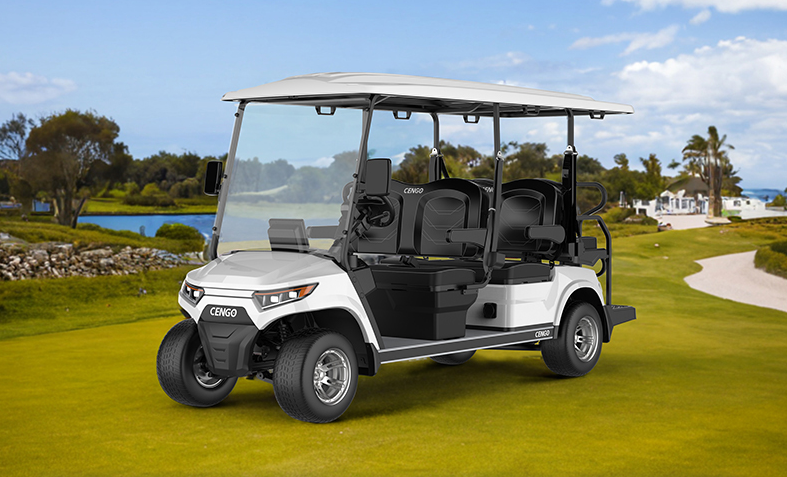
Picture shown: CENGO NL-LC4+2
Buyers needing a fleet tailored to specific range, seating capacity, or battery requirements can also rely on CENGO’s OEM & ODM services to customize electric golf carts to their exact specifications. With extensive industry experience and strong manufacturing capabilities, CENGO has delivered premium electric golf cart solutions for diverse applications across major global markets, including Southeast Asia, the Middle East, Europe, South America, and Africa.
CENGO’s project experience includes supporting large-scale international events and professional venues, such as:
l 2026 LIV Golf Hong Kong – providing an electric event fleet solution for efficient on-site transportation.
l The 15th National Games across the Greater Bay Area – supplying electric golf carts to support large-scale event operations.
l 2025 Aramco Team Series – delivering reliable golf cart solutions for professional golf events.
At CENGO, you can find reliable electric golf cart solutions for a wide range of operating environments, including golf courses, resorts, tourist attractions, industrial parks, airports, communities, and public-sector applications.
Conclusion
So, how long do lithium golf cart batteries last? In most cases, 8 to 12 years, roughly two to three times longer than lead-acid batteries, making lithium the more economical choice for golf courses, resorts, airports, and any operation running carts daily.
Pairing the right battery with proper charging habits and a trusted manufacturer helps a fleet get the most out of that lifespan. For operators and dealers ready to build a fleet around premium lithium batteries, get a quote from CENGO to match your exact requirements!
Post time: Aug-12-2026


